The Road Trip That Once Took Three Weeks Can Now Be Done in Four Days — Thank One Law for That
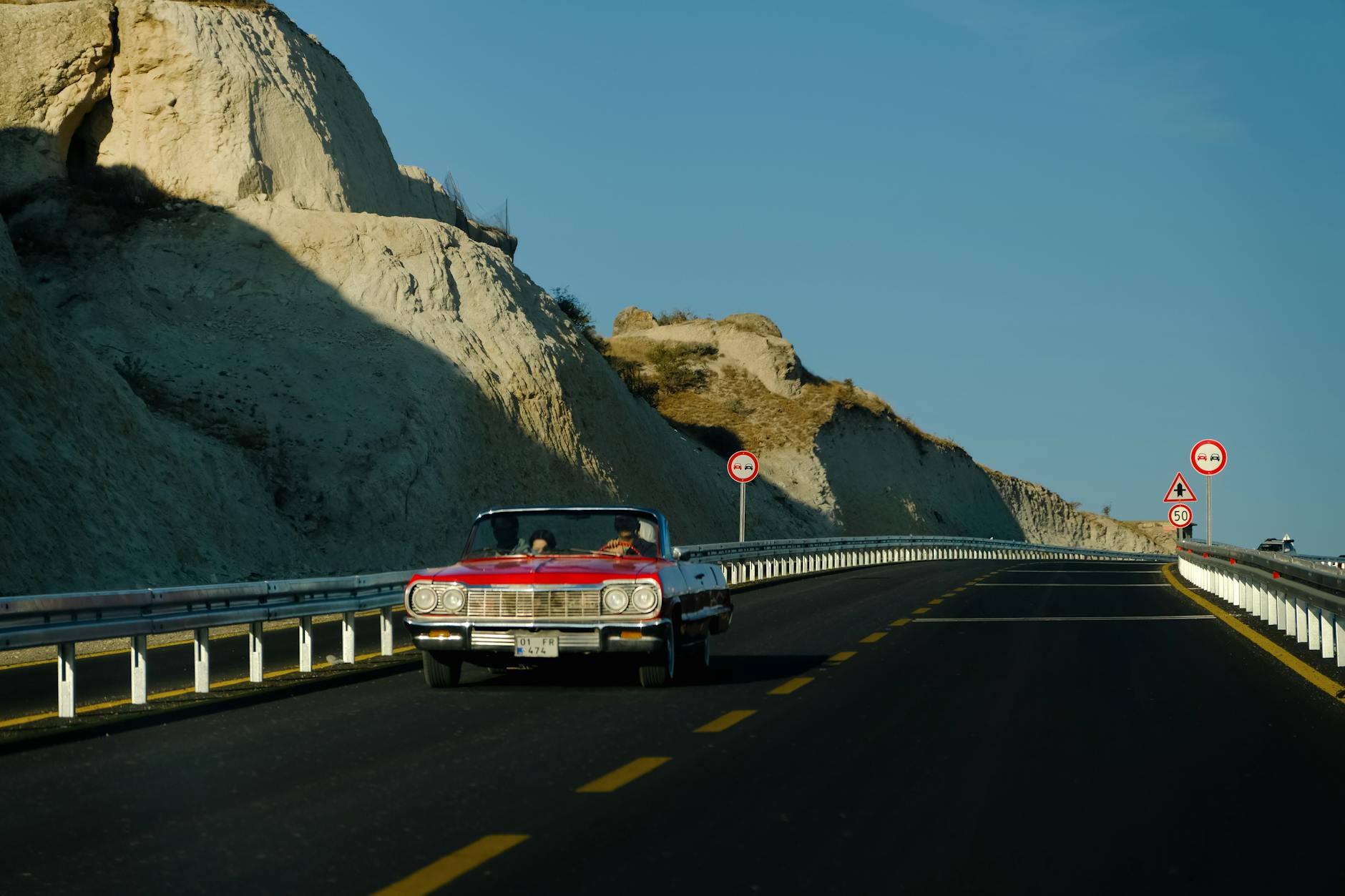
The Road Trip That Once Took Three Weeks Can Now Be Done in Four Days — Thank One Law for That
Picture this: it's 1952. You've decided to drive from New York City to Los Angeles. You've packed the car, kissed the family goodbye, and you're genuinely not sure when you'll arrive — or whether every stretch of road between here and there will actually be paved.
That wasn't paranoia. That was just Tuesday.
Today, the same trip takes most drivers somewhere between 40 and 45 hours of actual driving time — four or five days if you're stopping to sleep like a reasonable person. But for the better part of America's early automotive era, a coast-to-coast drive was closer to a two- or three-week commitment, and even that assumed nothing went badly wrong.
So what happened between then and now? The short answer: Eisenhower signed a bill, and the country was never the same.
What Driving Cross-Country Actually Looked Like Before 1956
Before the Federal Aid Highway Act of 1956, the American road network was a patchwork quilt — and not a particularly well-sewn one. The famous Route 66, which opened in 1926, was a romantic idea that didn't always match the reality beneath your tires. Large sections remained unpaved well into the 1930s. Even by the early 1950s, drivers navigating from the East Coast to California were stitching together a series of state and local roads, many of which ran directly through the center of small towns, complete with traffic lights, speed traps, and zero bypass options.
Average speeds on these routes hovered around 30 to 40 miles per hour when conditions cooperated — and conditions frequently didn't. Road quality varied wildly from state to state. Signage was inconsistent. If you missed a turn outside of Amarillo, Texas at 9 p.m., there was no GPS to bail you out. You pulled over and asked someone, or you just kept going and hoped.
Fueling up was its own adventure. Gas stations existed, sure, but their distribution was uneven, and running low between towns in the Southwest desert wasn't a minor inconvenience — it was a genuine hazard. Drivers carried spare fuel cans as a matter of course.
The whole experience demanded preparation, patience, and a fairly high tolerance for uncertainty.
The Law That Rewired America
In June 1956, President Dwight D. Eisenhower signed the Federal Aid Highway Act into law, authorizing the construction of 41,000 miles of limited-access highways across the United States. The price tag was $25 billion — roughly $280 billion in today's money — making it the largest public works project in American history at that point.
Eisenhower's motivation wasn't purely about convenience. He'd been deeply influenced by two experiences: a grueling 62-day military convoy across the country in 1919, which averaged just 58 miles per day on crumbling roads, and his observation of Germany's Autobahn during World War II. He saw high-speed, limited-access highways as a matter of national defense — a way to move troops and equipment rapidly across the continent if the Cold War ever turned hot.
What he built, almost as a side effect, was the infrastructure that made modern American life possible.
By the early 1970s, the Interstate Highway System was largely complete. Drivers could now travel from coast to coast almost entirely on controlled-access highways — no traffic lights, no Main Street speed zones, no mystery intersections in the middle of nowhere. The physical geography of the country hadn't changed, but the functional distance between cities collapsed almost overnight.
What the Drive Feels Like Now vs. Then
The contrast isn't just about speed, though the speed difference alone is staggering. A 1950s cross-country driver averaging 35 mph over 2,800 miles is looking at 80 hours of pure driving time — and that's before accounting for the fact that roads weren't always direct, and detours were common. Spread that over a realistic driving day and you're easily at 15 to 20 days of travel.
Today's driver on I-80 or I-40 can maintain 75 to 80 mph across long stretches of the Midwest and Southwest. The same 2,800 miles now runs closer to 40 hours of driving. That's not just a modest improvement — it's a near-total transformation of what the journey demands from you.
Rest stops along the modern interstate are a quiet miracle most of us ignore completely. Clean facilities, consistent spacing, cell service, and in many states, free coffee for truckers. The roadside motels that sprang up along the new interstates in the late 1950s and 1960s — Holiday Inn opened its first location in 1952 and exploded in the interstate era — standardized overnight travel in a way that simply hadn't existed before.
Navigation is almost too easy to even compare. The idea of printing out MapQuest directions in 2002 already feels ancient. Today, Google Maps or Waze will reroute you around a traffic jam in real time, locate the nearest charging station if you're driving electric, and tell you exactly how long until you hit that construction backup outside of Flagstaff.
The Thing Most Americans Don't Realize
Here's what tends to surprise people: the Interstate Highway System wasn't an inevitable product of American car culture. It was a deliberate, contested political decision — one that took years to push through Congress and faced real opposition from railroads, urban planners, and fiscal conservatives who thought the price tag was insane.
It also reshaped American life in ways that went far beyond road trips. It made suburban sprawl economically viable. It transformed the trucking industry and, with it, the entire supply chain that keeps American grocery stores stocked. It killed off countless small-town economies that had thrived on Route 66 and similar roads — towns that disappeared almost overnight once the interstate bypassed them.
The road trip you take for granted this summer — the one where you hop on I-95 or cruise I-10 with a full tank and a working playlist — exists because of an engineering and policy decision made nearly 70 years ago. Next time you blow past a green interstate sign at 75 miles an hour, that's worth a moment's thought.