When Dental Care Was Part of Regular Life
In 1960, a filling at your neighborhood dentist cost about $3. A tank of gas for your car? Around $3.50. The dentist was actually cheaper than filling up.
Dr. William Patterson ran a practice in suburban Chicago for thirty-seven years, starting in 1952. His appointment book from 1965 shows cleaning fees of $2.50, simple fillings for $4, and extractions for $6. His patients included factory workers, teachers, and shop owners — regular middle-class Americans who scheduled dental visits as routinely as oil changes.
"People came in when something hurt, and they came back six months later for a cleaning," Patterson wrote in a 1995 memoir. "Nobody talked about insurance. Nobody talked about payment plans. You paid what you owed, and it was never enough to break anybody."
That world is gone. Today's average filling costs $200-$300. A routine cleaning runs $100-$150. Root canals start at $1,000 and climb quickly from there.
The Split That Changed Everything
Dental care wasn't always separate from regular medicine. In the early 1900s, many physicians handled basic dental work alongside other treatments. But as both fields specialized, dentistry carved out its own territory — and its own economic model.
The crucial moment came in the 1960s when employer health insurance became standard for American workers. Medical coverage expanded rapidly, but dental benefits remained an afterthought. Insurance companies treated teeth as optional equipment, something you could live without if money got tight.
This created a unique situation: dental care became the only routine healthcare service that most Americans paid for entirely out of pocket. While medical costs were increasingly buffered by insurance, dental prices faced direct consumer resistance — which should have kept them low.
Instead, something else happened.
The Luxury Creep
Without insurance pressure to control costs, dental practices began positioning themselves differently. The sterile medical office gave way to spa-like environments with aromatherapy and massage chairs. Simple procedures acquired premium branding — "cosmetic enhancement" instead of "fixing your teeth."
Dr. Sarah Chen, who practiced in both the 1980s and 2010s, watched this transformation firsthand. "When I started, we fixed problems," she explains. "By the time I retired, we were selling smiles. The same work, but suddenly it was an investment in your confidence and career success."
Meanwhile, dental school costs exploded. In 1980, the average dental school graduate carried $8,000 in debt — about $30,000 in today's money. Current graduates average $300,000 in loans. Those monthly payments demand higher fees from day one.
When Skipping Care Became Normal
The American Dental Association's own surveys reveal the stark result: by 2019, 64% of American adults had not seen a dentist in the past year. Among working-class families, that number climbed above 75%.
This represents a complete reversal from the 1960s, when annual dental visits were as routine as annual physical exams. Back then, people delayed buying new clothes or eating out before they'd skip dental care. Today, millions of Americans simply live with tooth pain because the cure costs more than their monthly grocery budget.
The health consequences compound over time. Dr. Robert Martinez, who runs a community clinic in Phoenix, sees patients who've gone years without care. "I see infections that could have been prevented with a $150 cleaning," he says. "Instead, we're talking about $3,000 in emergency treatment."
The Insurance Illusion
Even when Americans do have dental insurance, the coverage often feels like a cruel joke. Most plans cap annual benefits at $1,000-$1,500 — an amount that hasn't increased meaningfully since the 1970s while costs have risen tenfold.
"Your dental insurance might cover 80% of a cleaning," explains insurance analyst Janet Morrison. "But if you need a crown, you're paying $800 out of pocket even with coverage. People think they're protected, but they're really just getting a small discount."
This creates a two-tier system that would have been unthinkable in Dr. Patterson's era. Wealthy Americans get preventive care that keeps their teeth healthy for life. Everyone else waits until something breaks, then faces bills that can rival a used car purchase.
The Neighborhood Dentist's Dilemma
Today's dentists didn't necessarily choose this system. Many entered the profession wanting to help people, only to discover that business realities make affordable care nearly impossible.
Dr. Lisa Rodriguez opened her practice in 2018 with idealistic plans to serve her working-class community in San Antonio. "I wanted to be like the old family dentist," she says. "But my student loans are $4,200 a month. My rent is $8,000. My equipment lease is $2,100. Before I see a single patient, I need to generate $15,000 just to break even."
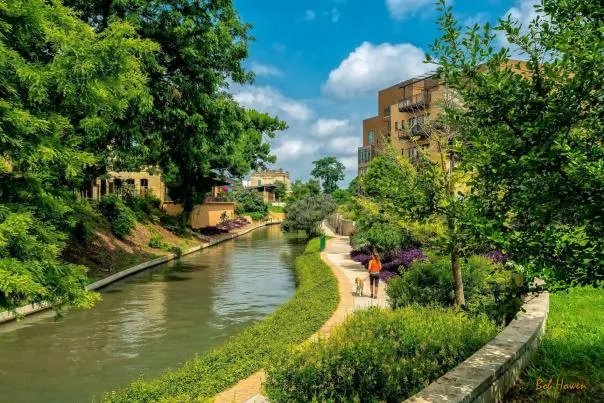 Photo: San Antonio, via assets.simpleviewinc.com
She's tried sliding scale fees and payment plans, but the math remains brutal. "I can't charge 1960s prices with 2025 overhead," she admits.
What We Lost
The transformation of dental care from routine maintenance to luxury service represents more than just higher prices. It's the loss of a basic assumption that shaped mid-century American life: that working people could afford to take care of themselves.
In Dr. Patterson's world, a factory worker didn't have to choose between fixing a cavity and paying the electric bill. Dental health was simply part of being a responsible adult, like changing your car's oil or getting an annual physical.
Today, nearly half of American adults report avoiding or delaying dental care due to cost. We've created a healthcare system where your teeth — visible every time you smile or speak — have become a marker of economic class rather than personal hygiene.
That $3 filling from 1960 would cost about $30 in today's money if it had simply kept pace with inflation. Instead, it costs ten times that amount. Somewhere in the gap between those numbers lies the story of how America decided that healthy teeth were a luxury item rather than a basic necessity.