Fix It Where You Park It: America's Lost Age of Doorstep Service
The UberEats driver pulling into your driveway isn't pioneering anything new. He's just the latest chapter in an American story that started with the knife sharpener's bell and the shoe cobbler's leather satchel.
For most of the twentieth century, before strip malls swallowed Main Street and chain stores standardized everything, Americans lived in a world where services came to them. The mechanic didn't wait in a bay for you to drive over — he loaded his tools into a truck and met you in your driveway. The watch repairman didn't operate from a mall kiosk — he carried a portable workbench from house to house, fixing timepieces on kitchen tables while families watched.
When Your Neighborhood Was Your Service Center
Walk through any American suburb built before 1960, and you'll notice something the developers didn't plan for: driveways wide enough for service trucks, garages designed for actual work, and neighborhoods compact enough that a traveling tradesman could hit a dozen houses in an afternoon.
That wasn't an accident. These neighborhoods were built for an economy that moved differently.
The Fuller Brush man didn't just sell cleaning supplies — he diagnosed household problems and offered solutions tailored to each family's needs. The Electrolux vacuum salesman didn't just demonstrate his product — he serviced machines in customers' living rooms, replacing belts and cleaning filters while explaining how everything worked.
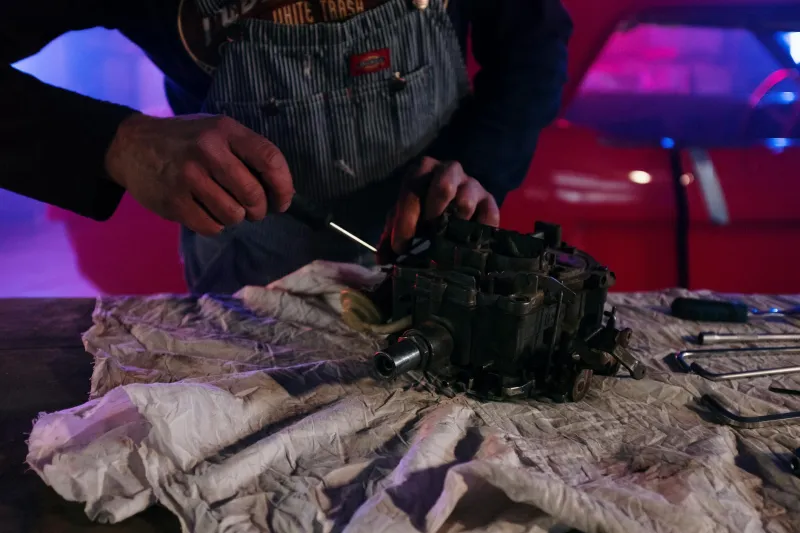
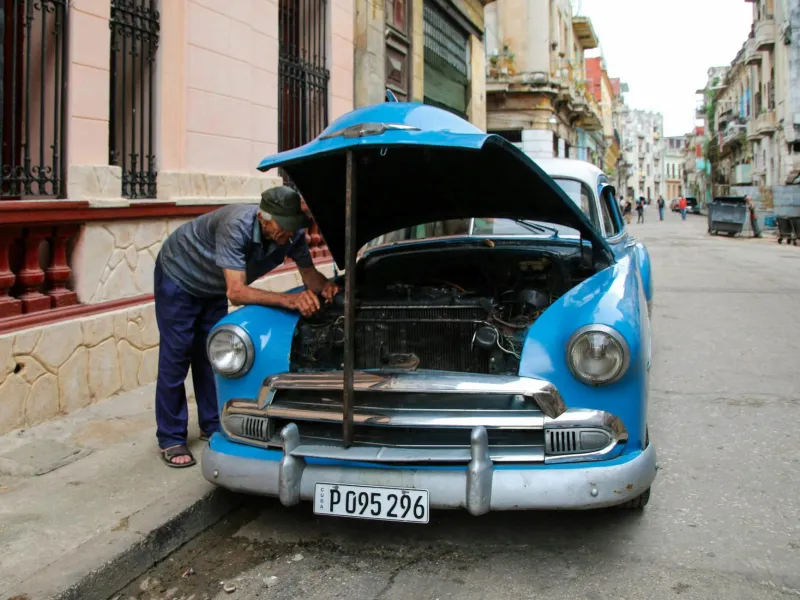
Even car repairs happened where you parked. Mobile mechanics were so common that most driveways included electrical outlets specifically for their equipment. Oil changes, brake work, even engine overhauls took place in residential driveways, with neighbors stopping by to watch and learn.
The Economics of Coming to You
This wasn't just convenience — it was a completely different business model.
Traveling tradesmen operated with minimal overhead. No rent, no utilities, no storefront insurance. Their trucks were their workshops, their routes were their retail space. They could charge less because they spent less, and they could charge more because they offered something invaluable: they saved customers time.
For families with one car and complex schedules, having services come to them wasn't a luxury — it was essential. A broken washing machine didn't mean a day off work to wait for a repair appointment. The repairman worked around your schedule, not the other way around.
The shoe cobbler who visited every Tuesday didn't just fix heels and replace soles — he maintained relationships. He knew which family members were hard on shoes, which styles lasted longest, and when someone needed work boots versus dress shoes. His business ran on trust and repeat customers, not foot traffic and advertising.
The Great Centralization
Somewhere between the 1960s and 1980s, America decided that efficiency meant bringing customers to services instead of bringing services to customers.
The rise of suburban shopping centers promised one-stop convenience, but it actually created a different kind of inconvenience: the need to drive somewhere, park, wait, and drive back. What looked like progress was often just a transfer of time and effort from businesses to customers.
Specialized service centers could handle more volume and offer lower prices through economies of scale, but they also eliminated the personal relationships that made the old system work. Your mechanic no longer knew your car's history — he knew the diagnostic codes that flashed on his computer screen.
The mobile repairman who could fix your radio, sharpen your knives, and tune your bicycle was replaced by three different strip mall stores, each requiring a separate trip and each staffed by employees who might not be there next week.
Why the Old Way Disappeared
The traveling tradesman economy collapsed for reasons that had little to do with customer satisfaction and everything to do with changing American life.
Insurance companies began requiring business licenses and fixed addresses. Zoning laws prohibited commercial activity in residential neighborhoods. Labor regulations made it harder for small operators to compete with established businesses.
Most importantly, Americans got richer and busier. Families that could afford multiple cars didn't need services to come to them — they could drive to services. The convenience of having someone come to your house was replaced by the convenience of having everything available when you wanted it, not when the traveling repairman's route brought him to your neighborhood.
The Digital Renaissance
Today's gig economy is essentially a high-tech version of the traveling tradesman system, complete with the same advantages and challenges.
TaskRabbit handymen, mobile pet groomers, and on-demand car detailing services operate exactly like their mid-century predecessors: minimal overhead, flexible schedules, and personal service. The main difference is the technology that connects them to customers and the venture capital that funds their growth.
But there's something the modern version has lost. The old traveling tradesmen built relationships over years and decades. They knew their customers' preferences, their budgets, and their families. Today's on-demand services optimize for speed and convenience, not continuity and trust.
What We Gained and Lost
The shift from mobile services to service centers gave Americans lower prices, more choices, and greater specialization. But it also required everyone to own cars, spend time traveling to services, and accept that convenience meant adapting to business hours instead of businesses adapting to customer schedules.
The traveling tradesman era worked because American neighborhoods were designed for it and American families needed it. Today's on-demand economy works because American consumers can afford it and American technology enables it.
The real difference isn't in the services themselves — it's in what we expect from them. The knife sharpener who visited every month was part of the neighborhood's rhythm. The TaskRabbit who shows up this afternoon is part of our individual convenience.
Both systems work. They just serve different versions of American life.