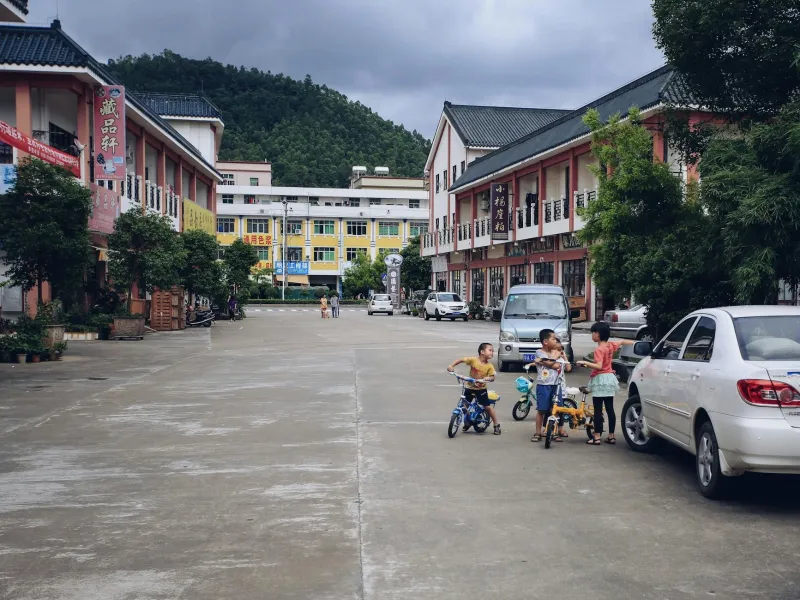
"Be home when the streetlights come on." For millions of American children in the 1960s and 70s, this simple instruction launched entire days of unsupervised adventure. Kids as young as six would bolt out the door after breakfast, spending the next ten hours building forts in vacant lots, riding bikes to distant neighborhoods, and creating elaborate games that required no adult input whatsoever.
This wasn't neglect—it was childhood. And the economic and cultural forces that killed it have reshaped not just how kids grow up, but how American families spend their money, time, and energy.
When Neighborhoods Were Playgrounds
The suburban landscape of mid-century America was designed for wandering children. New developments included vast empty lots waiting for future construction, expansive parks with minimal supervision, and creek beds that became natural highways for bike-riding explorers. Neighborhood kids knew every shortcut, every climbable tree, and every house where they could get a drink of water without questions.
This freedom operated on simple rules understood by every child: don't go in strangers' houses, stay out of trouble, and be home by dinner. Parents didn't track their children's locations because the entire neighborhood served as an informal monitoring system. Mrs. Johnson would note that the Miller kids were playing in the park, while Mr. Thompson might mention seeing them riding bikes toward the school playground.
The economics of this arrangement were elegantly simple: it cost nothing. Parents didn't pay for supervision, transportation, or structured activities because the neighborhood itself provided all three. Kids entertained themselves with games that required nothing more expensive than a ball, some chalk, or whatever materials they could scrounge from construction sites.
The Rise of Structured Childhood
Somewhere between 1980 and 2000, American childhood underwent a dramatic transformation. The kids who once roamed freely became parents terrified of letting their own children walk to the corner store alone. A generation that had spent summers building tree houses and exploring drainage tunnels began enrolling their kids in camps, classes, and activities that structured every waking hour.
This shift wasn't driven by a sudden increase in danger—crime rates actually fell during this period. Instead, it reflected changing cultural expectations about what good parenting looked like. The rise of competitive parenting culture, amplified by media coverage of rare but horrific crimes, convinced American parents that constant supervision wasn't just preferable—it was necessary.
The economic impact was immediate and enormous. Families that once spent nothing on childhood entertainment suddenly faced bills for soccer leagues, music lessons, art classes, and summer camps. The average American family now spends over $3,000 annually on children's activities and programs that didn't exist when today's parents were kids.
The Liability Revolution
The legal landscape changed as dramatically as the cultural one. Property owners who once welcomed neighborhood kids to play in their yards and empty lots began posting "No Trespassing" signs and installing fences. The rise of liability lawsuits meant that informal play spaces—the vacant lots, construction sites, and creek beds that had entertained previous generations—became legal risks that property owners couldn't afford.
Schools eliminated playground equipment deemed too dangerous, removed jungle gyms that had challenged kids for decades, and banned games like dodgeball that might result in injury. The calculated risks that had once been considered normal parts of childhood development became unacceptable legal exposures.
This transformation fundamentally changed the geography of childhood. The sprawling territory that kids once claimed as their own shrank to carefully controlled spaces: fenced playgrounds with rubber surfaces, organized sports fields with adult supervision, and indoor facilities designed to minimize risk.
The Real Estate of Childhood
The death of unsupervised childhood reshaped American real estate in ways that most people don't recognize. The suburban neighborhoods built in the 1950s and 60s assumed that children would entertain themselves in the surrounding landscape. Houses were smaller because families spent more time outside. Yards were unfenced because the entire neighborhood functioned as communal play space.
Modern suburban development reflects completely different assumptions about childhood. Houses are larger because families spend more time inside. Yards are fenced and equipped with elaborate play structures that serve as private substitutes for the communal spaces kids once shared. Neighborhoods are designed around car transportation because parents drive children to activities rather than letting them walk or bike independently.
The premium for "good school districts" has skyrocketed partly because parents can no longer rely on neighborhood-based childhood experiences. When kids can't roam freely, the quality of formal institutions—schools, recreation centers, organized programs—becomes crucial in ways it never was when the neighborhood itself provided education and entertainment.
What We Bought Instead
The structured childhood that replaced free-range exploration created entirely new industries. Youth sports became a $19 billion business. Summer camps evolved from simple outdoor experiences to specialized programs that cost thousands of dollars. Even birthday parties transformed from backyard gatherings into elaborate productions at entertainment venues.
This shift represented more than changing consumer preferences—it reflected a fundamental redefinition of childhood itself. Instead of kids creating their own entertainment, parents began purchasing it. Instead of children learning independence through unsupervised exploration, they developed skills through adult-directed activities.
The financial burden on families has been enormous. The average American household now spends more on children's activities and education than previous generations spent on housing. Parents who once provided childhood simply by opening the front door now invest thousands of dollars annually in creating experiences that approximate what neighborhoods once offered for free.
The Price of Safety
Today's heavily supervised childhood has undoubtedly reduced certain risks. Fewer children are injured in unsupervised accidents, abducted by strangers, or exposed to dangerous situations. But this safety came with costs that extend far beyond money.
Kids who once learned independence by navigating their neighborhoods now struggle with anxiety when faced with unstructured time. The problem-solving skills that developed naturally through unsupervised play must now be taught through expensive programs and therapeutic interventions. The social connections that once formed organically in neighborhood groups now require organized playdates and structured activities.
The economic burden of structured childhood has also created new forms of inequality. Families with resources can purchase elaborate activity schedules and enrichment programs, while lower-income families struggle to provide the supervised experiences that have become markers of good parenting.
The Neighborhood That Disappeared
The transformation of American childhood represents more than changing parenting styles—it reflects the death of a particular kind of community. The neighborhoods that once supported free-range children required high levels of social trust, shared responsibility, and collective investment in public spaces.
Those communities didn't disappear because they were dangerous or inadequate. They vanished because American culture decided that childhood required professional supervision, structured activities, and constant adult input. In making that choice, we created safer, more controlled childhoods—but we also eliminated the economic efficiency and community bonds that made the old system work.
The kids who once ruled the neighborhood until the streetlights came on grew up to become parents who can't imagine letting their own children walk to school alone. In protecting them from the risks of independence, we've created new risks—and new costs—that previous generations never had to consider.