Ma Bell's Monthly Ransom: When Americans Paid Rent Just to Own a Telephone
In 1980, if you wanted a phone in your home, you had exactly one option: call AT&T and ask them nicely to install one. Then you paid them every month for the privilege of keeping it.
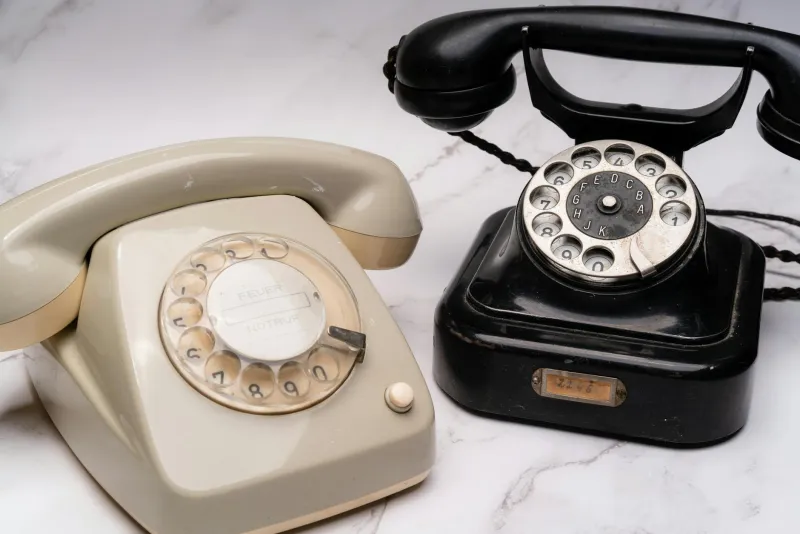
Not paying for phone service — paying to rent the actual plastic device sitting on your kitchen counter. For decades, this was simply how telecommunications worked in America. The phone company owned everything, from the copper wires running to your house to the beige rotary handset you used to call your mother.
The Monopoly That Made Millions Pay Rent Forever
AT&T's stranglehold on American telecommunications was so complete that most people never questioned it. Need a phone installed? Wait two to six weeks for a technician. Want a different color? That'll cost extra. Thinking about buying your own phone? Good luck finding one — and even if you did, AT&T could refuse to connect it to their network.
The monthly rental fee seemed modest — typically $3 to $5 per handset in the late 1970s. But here's the math that should make your head spin: families often rented the same phone for decades. A phone that cost AT&T maybe $25 to manufacture would generate $600 or more in rental fees over its lifetime. It was the subscription model before anyone called it that.
"We had three phones in our house, and we paid rent on all of them for twenty-two years," remembers Patricia Williams, now 73, from Columbus, Ohio. "I never even thought to question it. That's just how phones worked."
When Your Phone Bill Was Bigger Than Your Electric Bill
The total cost of telecommunications consumed a surprising chunk of American household budgets. Between basic service, long-distance charges that could hit $1 per minute, and those endless rental fees, phone bills often rivaled utility payments. A typical middle-class family might spend $40-60 monthly on telecommunications in 1980 dollars — roughly $150-200 in today's money.
Long-distance calls were priced like luxury goods. Calling your college kid in another state was a carefully timed event, often reserved for Sundays when rates dropped slightly. Families developed elaborate strategies to minimize costs: hang up and call back if you got a busy signal (no charge), keep calls short and businesslike, write letters for anything that wasn't urgent.
The Breakup That Changed Everything
The 1984 court-ordered breakup of AT&T didn't just end a monopoly — it rewrote the entire relationship between Americans and their phones. Suddenly, you could buy your own handset at Radio Shack. Local service remained regulated, but long-distance became a competitive battlefield.
The changes came faster than anyone expected. By 1985, discount long-distance providers were advertising rates 30-50% below AT&T's. By 1990, answering machines and cordless phones had transformed home communication. By 2000, cell phones were making the whole argument about landline competition seem quaint.
The Wireless Revolution Nobody Saw Coming
Today's telecommunications landscape would seem like science fiction to someone from 1980. Americans now carry devices more powerful than room-sized computers, with unlimited calling to anywhere in the country, often for less than what a single long-distance call used to cost.
The average American smartphone bill — around $70-90 monthly — buys capabilities that didn't exist at any price forty years ago. Unlimited data, video calling, access to humanity's entire knowledge base, navigation systems, cameras, entertainment libraries. The monthly cost is roughly equivalent to what families paid just for basic phone service in inflation-adjusted dollars.
What We Gained and Lost in the Translation
The efficiency gains are undeniable. Communication costs plummeted while capabilities exploded. But something was lost in the translation from Ma Bell's measured pace to today's instant everything.
Phone calls used to be events. You planned them, you prepared for them, you gave them your full attention. The friction of dialing — especially long-distance — meant conversations had weight. People said what they meant because time was literally money.
Now we text reflexively, call carelessly, and stay connected constantly. The cost in dollars dropped, but the cost in attention and intentionality might have risen.
The Legacy of America's Last Great Monopoly
AT&T's telecommunications monopoly was the last of the great American utility monopolies to fall. Its breakup marked the beginning of the deregulation era that would reshape everything from airlines to banking. The idea that competition could deliver better service at lower prices — now taken for granted — was genuinely revolutionary in 1984.
Looking back, it's remarkable how quickly Americans adapted to choice in telecommunications. Within a generation, the idea of renting your phone from the phone company went from universal practice to historical curiosity.
Yet in our rush to celebrate progress, it's worth remembering what that old system delivered: phones that worked for decades, service that was utterly reliable, and a simplicity that today's maze of carriers, plans, and devices has definitely not replicated.
The monthly phone rental might have been a racket, but at least it was an honest racket. You knew exactly what you were paying for, and it worked every time you picked up the receiver.