The Cathedral of Dreams
Step into the lobby of the Paramount Theatre in downtown Aurora, Illinois, circa 1955. The ceiling soars twenty feet above your head, painted with clouds and twinkling stars that actually light up. Crystal chandeliers cast warm light over burgundy carpets thick enough to muffle footsteps. The air smells like fresh popcorn and anticipation.
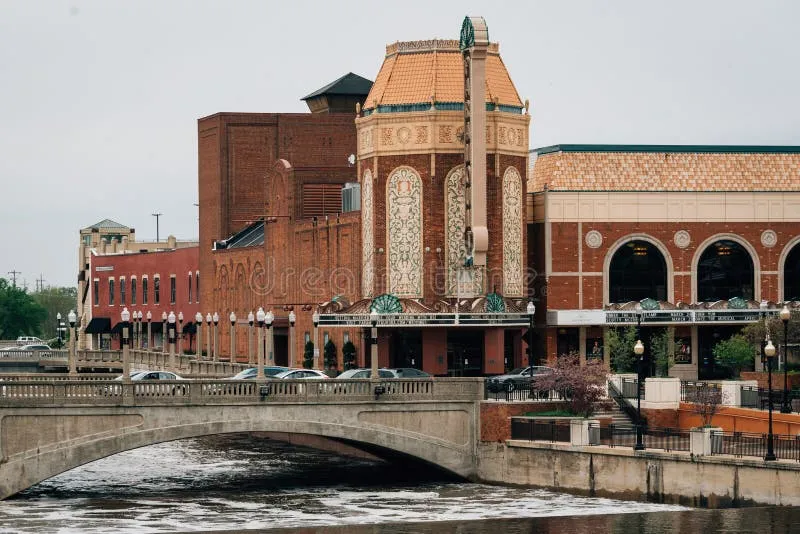 Photo: Aurora, Illinois, via thumbs.dreamstime.com
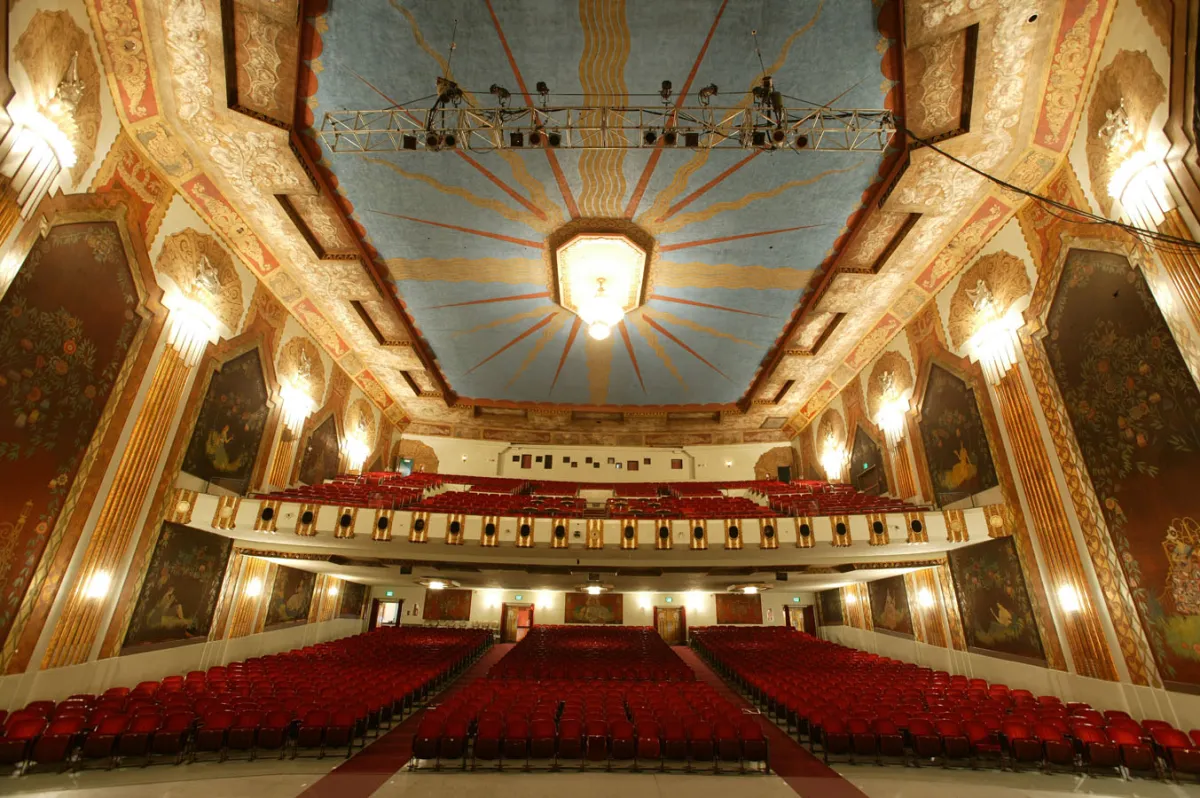 Photo: Paramount Theatre, via www.rmcatos.org
You're not just going to see a movie—you're entering a palace built specifically to make ordinary people feel extraordinary. And you're doing it alongside half your town.
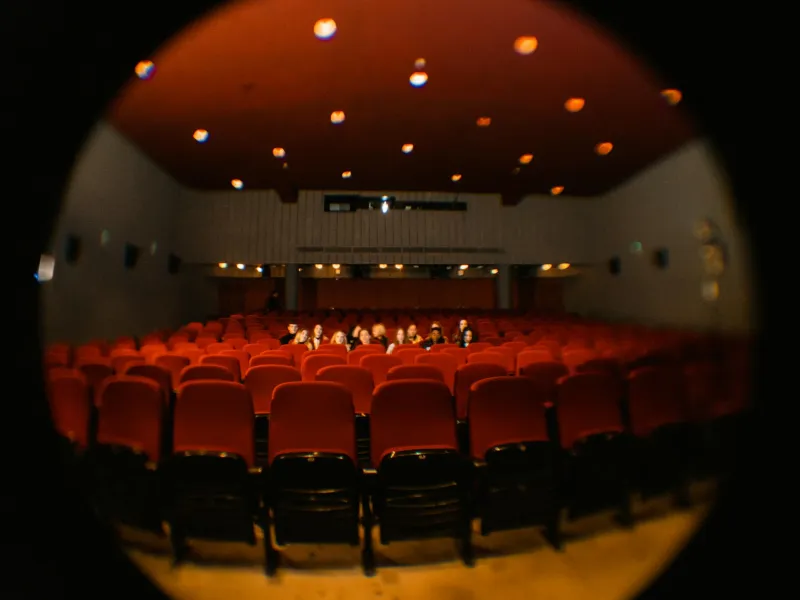
This was the American movie theater before multiplexes, before streaming, before entertainment became something you consumed alone in your living room. It was a shared ritual that brought together people who might never speak to each other anywhere else, united by nothing more complicated than the desire to escape reality for two hours.
Democracy in the Dark
The genius of the single-screen neighborhood theater wasn't just architectural—it was social. When there was only one movie playing, everyone saw the same thing. The bank president and the factory worker, the teacher and the farmer, all sat in the same darkness and laughed at the same jokes.
This wasn't accidental. Theater owners understood that their business model depended on broad appeal. They couldn't survive by catering to narrow demographics because their demographics were everyone in town. The programming had to work for teenagers on dates and grandparents celebrating anniversaries, for families with young children and adults looking for sophisticated entertainment.
Contrast that with today's entertainment landscape, where algorithms feed us increasingly narrow slices of content designed to match our existing preferences. Netflix doesn't want to show you something that might challenge your taste—it wants to show you something guaranteed to keep you watching. The result is entertainment that confirms rather than expands our worldview.
The Price of Wonder
In 1955, a movie ticket cost about 50 cents—roughly equivalent to $5 today when adjusted for inflation. But that comparison misses the point entirely. The real measure wasn't what a ticket cost, but what it represented as a percentage of ordinary income and what you got for your money.
A factory worker earning $65 a week could take his family of four to the movies for less than 5% of his weekly wages. Today, that same percentage would buy you about one month of a basic Netflix subscription—or maybe two movie tickets at current theater prices, without popcorn.
But the old system gave you more than just the film. You got the full theatrical experience: the ornate architecture, the live organist playing before the show, the newsreel and cartoon shorts, and most importantly, the shared social ritual of being part of an audience.
When Entertainment Was an Event
Saturday night at the movies wasn't just something to do—it was the thing to do. Families planned their weeks around it. Teenagers saved allowance money for it. Store owners scheduled their hours around it, knowing downtown would empty out when the feature started.
The theater itself was designed to make the experience feel special. Those soaring ceilings and elaborate decorations weren't just showing off—they were creating a psychological transition from the ordinary world outside to the magical world within. You dressed up to go to the movies, not because anyone required it, but because the space itself commanded respect.
Compare that to today's movie-going experience. Multiplexes are designed for efficiency, not wonder. The lobbies are cramped, the theaters are boxes, and the whole experience feels more like boarding an airplane than entering a palace. We've gained convenience and lost ceremony.
The Conversation That Lasted All Week
When everyone in town saw the same movie, it created a shared cultural reference point that lasted for days. Monday morning conversations at work, Wednesday discussions at the grocery store, Friday debates at the barbershop—all centered around what everyone had experienced together on Saturday night.
This wasn't just small talk; it was how communities processed ideas together. Movies introduced new concepts, challenged assumptions, and sparked debates that rippled through the social fabric. When everyone saw "On the Waterfront" or "Rebel Without a Cause," the whole town grappled with the themes together.
Today's fragmented viewing habits make that kind of shared cultural conversation nearly impossible. We're all watching different shows on different schedules through different platforms. Water cooler conversations have been replaced by algorithm-driven recommendations that ensure we never have to engage with content outside our comfort zones.
The Economics of Inclusion
The old movie palace business model worked because it was genuinely democratic. Success required appealing to the broadest possible audience, which meant programming that could satisfy different tastes without alienating anyone completely.
Theater owners were community stakeholders in ways that streaming executives simply aren't. They lived in the towns they served. Their success depended on maintaining relationships with local families across generations. They had incentives to program content that brought people together rather than driving them apart.
Modern entertainment companies optimize for different metrics: engagement time, subscriber retention, and demographic targeting. Success means keeping people watching, not bringing them together. The business model rewards division rather than unity.
What We Lost in the Transition
The shift from single-screen theaters to multiplexes to streaming wasn't just about technology—it was about fundamentally different ideas about what entertainment should do. The old system prioritized shared experience; the new system prioritizes individual choice.
We gained convenience, selection, and the ability to watch what we want when we want it. But we lost the serendipity of discovering something unexpected, the social bonding that comes from shared experience, and the democratic leveling that happened when rich and poor sat in the same seats watching the same screen.
The Phantom Architecture of Community
Drive through any American town today and you'll see the ghosts of this lost system. The old movie theater on Main Street, now converted to a furniture store or demolished entirely. The marquee that once announced this week's feature, now advertising tax services or left blank entirely.
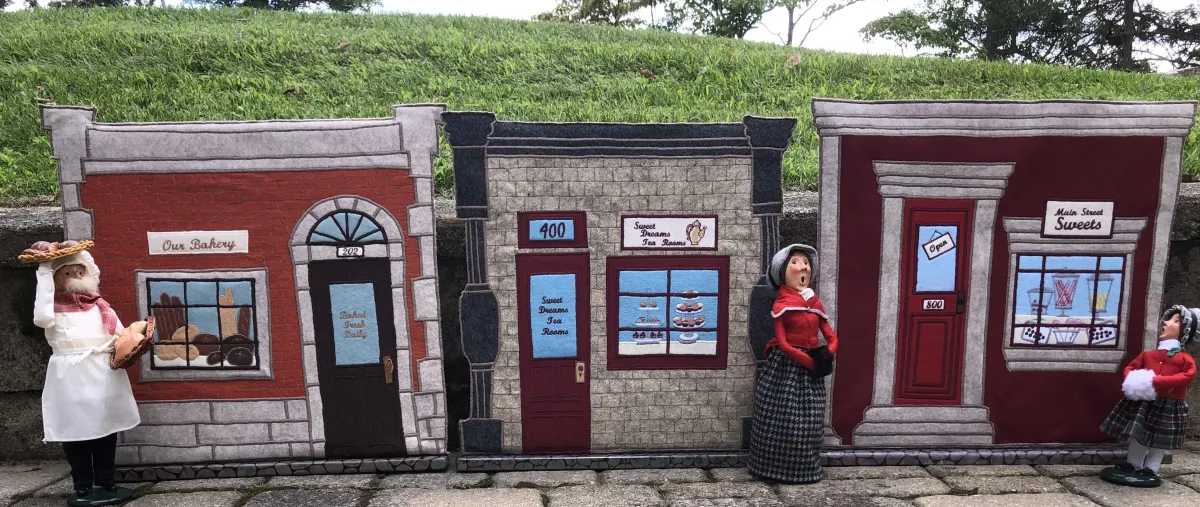 Photo: Main Street, via mainstreetscenes.com
These aren't just architectural losses—they're social infrastructure losses. We eliminated not just buildings but the gathering spaces that helped communities function as communities. We replaced shared ritual with individual consumption, and we're still figuring out what that means for how we relate to each other.
The neighborhood movie palace did something that Netflix, for all its technological sophistication, simply cannot: it brought us together in the same place at the same time to experience wonder collectively. In our rush to make entertainment more convenient, we might have made it less meaningful.