Ask any American family how they'd manage with just one car, and you'll get the same response: panic. School pickups, work commutes, grocery runs, soccer practice — the logistics seem impossible without multiple vehicles.
Yet in 1960, only 22% of American households owned more than one car. The rest somehow managed to get five people fed, employed, educated, and entertained with a single set of wheels.
They weren't living in hardship. They were living in a different America.
The Choreography of the Single-Car Family
The Andersons of suburban Cleveland, circa 1962, owned a four-door Chevrolet Impala that served as the family's only motorized transportation. Dad drove it to work most days, but on Tuesdays he carpooled with neighbors so Mom could take it grocery shopping. Thursday evenings, Mom dropped Dad at his bowling league so she could drive the kids to piano lessons.
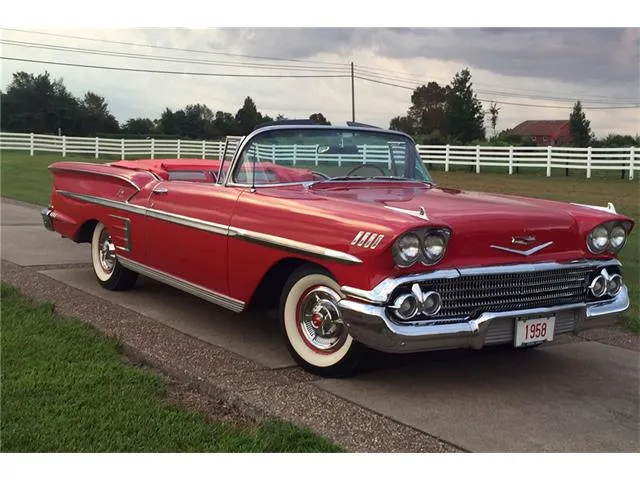 Photo: Chevrolet Impala, via ccpublic.blob.core.windows.net
This wasn't chaos — it was coordination. Families planned their weeks like military operations, with backup plans for backup plans. The single car wasn't a limitation; it was the hub around which family life revolved.
Children walked to school or took the bus. Mom scheduled errands for days when Dad could carpool or take public transit. Evening activities were planned around who needed the car when, and families often chose activities based on whether they could share transportation with neighbors.
The Sunday drive wasn't just leisure — it was often the only time the whole family used the car together, making it a weekly celebration of shared mobility.
The Infrastructure That Made It Work
The single-car family could function because America was built differently. Neighborhoods were denser, with schools, shops, and services within walking or biking distance. Public transportation wasn't just for cities — small towns had bus routes that connected residential areas to commercial districts.
Subdivisions were designed around the assumption that most families owned one car, not three. Houses had single-car garages or carports, and streets were narrower because they didn't need to accommodate multiple vehicles per household.
More importantly, American culture supported single-car living. Employers understood that workers might occasionally need to leave early for family car needs. Schools scheduled events with the assumption that parents would need to coordinate transportation. Communities organized carpools not just for convenience, but as social networks that strengthened neighborhood bonds.
The Hidden Economics of Car Multiplication
When families moved from one car to two, then three, they weren't just buying vehicles — they were buying independence from coordination. But that independence came with costs that went far beyond monthly payments.
A second car meant a second insurance policy, a second set of maintenance bills, and a second depreciation schedule. It meant larger garages, wider driveways, and bigger parking lots everywhere families went.
More subtly, multiple cars changed how families made decisions. With one car, every trip required consideration: Is this necessary? Can we combine errands? Can someone else give us a ride? With multiple cars, those questions disappeared — along with the money-saving habits they encouraged.
By 1980, the average American family spent 15% of their income on transportation, compared to 10% in 1960. The extra cars that were supposed to save time and money ended up requiring more of both.
How America Rebuilt Itself Around Multiple Cars
The shift from single-car to multi-car households didn't happen in isolation. It required — and enabled — a complete reorganization of American space.
New subdivisions were built with the assumption that every adult would drive everywhere. Schools were consolidated and located farther from residential areas, making walking or biking impossible. Shopping moved from walkable main streets to car-dependent strip malls and suburban plazas.
Public transportation withered as ridership declined, creating a cycle where families needed more cars because there were fewer alternatives to driving. Cities redesigned their streets to move cars faster, making them less safe and pleasant for pedestrians and cyclists.
By the 1990s, America had built a landscape that made single-car living nearly impossible for most families. The infrastructure that had supported shared mobility was gone, replaced by a system that assumed everyone could drive to everything.
The Social Cost of Individual Mobility
The single-car family required cooperation, planning, and community connections. Parents organized carpools with neighbors, creating relationships that extended beyond transportation. Children learned to coordinate with siblings and consider family needs when making plans.
Multiple cars eliminated the need for this cooperation — and with it, many of the social connections that cooperation created. Families became more independent but less interdependent. Neighbors became less essential when you didn't need to share rides or coordinate schedules.
The teenager who had to negotiate for car access learned planning and compromise. The teenager who got their own car at 16 learned that mobility was an individual right rather than a family resource.
Why Going Back Isn't Simple
Today's families can't simply return to single-car living because today's America wasn't built for it. The average suburban family lives too far from work, school, and services to function with shared transportation.
Even families who want to reduce their car dependence face infrastructure that makes it difficult or impossible. Suburbs with no sidewalks, schools with no bus service, and jobs in office parks designed exclusively for car access create transportation needs that one vehicle can't meet.
The coordination skills that made single-car families work have also atrophied. Parents who grew up with individual cars often lack the planning and negotiation abilities that their grandparents took for granted.
The Real Cost of Car-Dependent Design
American families now spend more on transportation than on food, healthcare, or education — second only to housing in their budgets. The average household owns 2.3 cars, each sitting unused 95% of the time, representing roughly $40,000 in capital that generates no return.
Beyond the financial costs, car-dependent living has reshaped American family life in ways we rarely acknowledge. Children who can't walk to school or friends' houses become dependent on adult chauffeurs. Parents spend hours each week driving to activities that previous generations could reach on foot or by bike.
The suburbs that promised freedom through car ownership often deliver the opposite: families trapped in vehicles, moving between isolated destinations, with little opportunity for the spontaneous interactions that build community.
What the Single-Car Era Teaches Us
The families who thrived with one car weren't making do with less — they were living in a system designed for shared resources and community cooperation. Their success wasn't about sacrifice; it was about different priorities and different infrastructure.
They prioritized accessibility over speed, coordination over independence, and community connections over individual convenience. Their neighborhoods were built to support these priorities, with services within walking distance and public spaces that encouraged interaction.
The single-car family represents more than just a different approach to transportation. It represents a different approach to American life — one where individual convenience was balanced against family cooperation, where mobility was seen as a shared resource rather than an individual right, and where communities were designed to bring people together rather than move them apart.
That world disappeared not because it didn't work, but because Americans chose a different set of trade-offs. Understanding what we traded away helps us understand what we might choose to trade back.