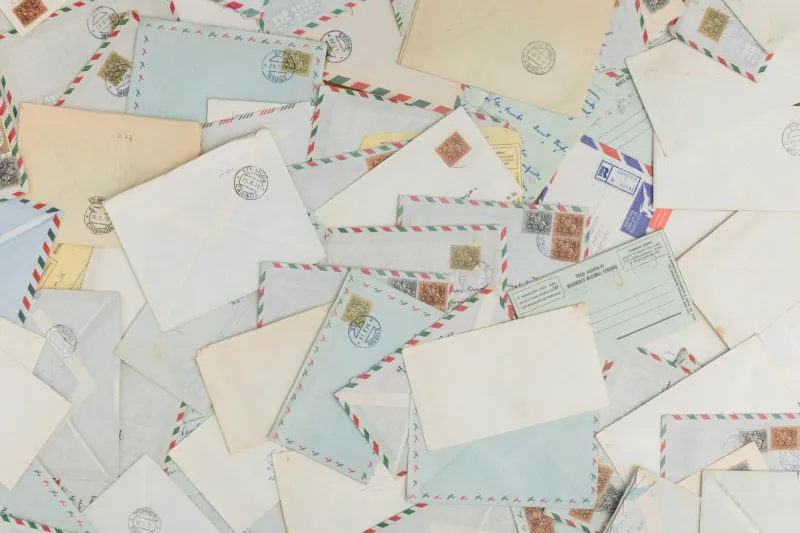
The first week of every month brought a familiar rhythm to American households. Mail slots would fill with windowed envelopes containing electric bills, phone bills, and mortgage statements. Kitchen tables would become command centers covered with checkbooks, stamps, and calculators. And across the country, millions of Americans would begin the careful choreography of keeping their financial lives in order.
This wasn't that long ago. As recently as the early 2000s, most Americans still paid their bills by mail, using a process that required planning, precision, and a surprising amount of faith in the postal system. Today, that entire ritual has vanished, replaced by autopay systems that handle everything invisibly in the background.
The Monthly Paper Parade
Bill paying began with the arrival of statements, usually clustered in the first few days of each month. The electric company, phone company, gas company, credit card companies, and mortgage holder all operated on roughly the same schedule, creating a monthly flood of mail that transformed household budgeting from a daily consideration into a monthly event.
"You'd spread all the bills out on the dining room table like you were playing solitaire," remembers Patricia Williams, a retired teacher from Ohio. "Then you'd go through each one carefully, checking the usage, looking for errors, making sure the math was right. You couldn't just glance at a number on your phone—you had to really engage with every single expense."
Each bill told a story. The electric bill showed whether you'd been running the air conditioning too much. The phone bill itemized every long-distance call, complete with duration and cost. Credit card statements listed every purchase with the merchant name and date. This level of detail forced a kind of financial awareness that's nearly impossible to replicate with digital statements that most people never read.
The Checkbook Ballet
Once you'd reviewed all the bills, the real work began. Out came the checkbook, that leather-bound ledger that served as both payment method and accounting system. Writing checks wasn't just about transferring money—it was about maintaining a running tally of your financial position.
"Every check had to be recorded immediately," explains Robert Chen, who managed household finances for his family throughout the 1980s and 1990s. "You'd write the check, tear it out, then immediately subtract that amount from your balance and write down what it was for. If you got sloppy with your record-keeping, you'd bounce a check, and that was both expensive and embarrassing."
The physical act of writing checks created a psychological barrier that digital payments lack. Each bill required you to physically write out the dollar amount twice—once in numbers, once in words. You had to sign your name, authorizing the expense. You had to subtract the amount from your available balance. Every payment required multiple conscious decisions that made spending feel real and consequential.
The Stamp and Envelope Economics
With checks written, the next challenge was packaging and mailing them. This required its own supply chain: boxes of envelopes, books of stamps, return address labels, and pens that wouldn't smear in the rain. Many families bought these supplies in bulk, treating them as essential household items like toilet paper or laundry detergent.
"I remember when stamps went from 25 cents to 29 cents and my mother complained for weeks about the extra expense," says Jennifer Martinez, whose family paid all their bills by mail through the 1990s. "When you're buying 20 stamps a month, a four-cent increase actually adds up. You were very aware of every cost involved in just paying your bills."
The envelope-stuffing process became its own ritual. Bills went into their return envelopes, checks were carefully folded to show through the window, and everything was sealed and stamped. Some people developed elaborate systems—color-coded envelopes, specific days for mailing different types of bills, or detailed spreadsheets tracking what was sent when.
The Three-Day Rule
Timing was everything in the pre-digital bill-paying world. You had to account for mail delivery times both ways—three to five days for the bill to reach you, then another three to five days for your payment to reach them. Miss the timing, and you'd face late fees that could easily cost more than the stamps you were trying to save.
"You'd get your electric bill on the 5th, but it was due on the 15th, so you had to mail it by the 12th to be safe," recalls David Thompson, who handled finances for a small business in the 1990s. "But you also couldn't mail it too early, because then it would sit in their system for weeks. There was this sweet spot where you had to time everything just right."
This timing pressure created a natural budgeting rhythm. You couldn't pay bills whenever you felt like it—you had to pay them when the calendar demanded. This forced families to plan their cash flow weeks in advance, ensuring money would be available when bills needed to be mailed.
Holidays and weekends complicated the timing even further. Mail didn't move on Sundays or federal holidays, so you had to account for these gaps in your calculations. A bill due on a Monday after a three-day weekend might need to be mailed the previous Wednesday to arrive on time.
When the System Failed
The mail-based bill payment system was remarkably reliable, but when it failed, the consequences were immediate and personal. Checks could get lost in the mail, creating frantic phone calls to utility companies. Payments could arrive late due to postal delays, triggering late fees and threatening letters. In extreme cases, services could be disconnected because a payment was sitting in a mail truck somewhere.
"I once had my phone shut off because my payment got delayed by a snowstorm," remembers Linda Rodriguez, a nurse from Minnesota. "The check was in the mail, but that didn't matter to the phone company. I had to drive to their office with a money order to get service restored. It was a real wake-up call about how vulnerable you were to things beyond your control."
These failures taught important lessons about building buffers into your financial system. Smart bill-payers learned to mail payments early, keep detailed records of when things were sent, and maintain small cash reserves for emergencies. The friction in the system actually encouraged more conservative financial habits.
The Psychological Weight of Paper
There was something profound about the physical nature of pre-digital bill paying that's hard to quantify but impossible to ignore. When you wrote a check for $150 to the electric company, you felt that money leaving your account in a way that's completely different from watching a number decrease on a smartphone screen.
"Writing out 'One hundred fifty dollars and 00/100' in cursive made you really think about what you were spending," notes Dr. Sarah Kim, who studies consumer psychology at Northwestern University. "It took time, it required attention, and it created what we call 'payment friction'—psychological resistance that made people more aware of their spending."
 Photo: Northwestern University, via wallpapers.com
This friction extended to the entire household. When bills were spread across the kitchen table, everyone in the family could see what things cost. Children learned about utility usage, mortgage payments, and the general expense of running a household simply by observing the monthly ritual. Money wasn't abstract—it was checks, stamps, and envelopes that had to be managed with care.
The Digital Revolution
The transition away from paper bills happened gradually, then suddenly. Online banking appeared in the 1990s, but many people were reluctant to trust their financial information to early internet systems. Automatic bill pay was available but required careful setup and monitoring.
By the 2000s, banks and utility companies were actively encouraging electronic payments through lower fees and faster processing. The convenience was undeniable—no more stamps, no more timing calculations, no more trips to the mailbox. Bills could be paid from anywhere with an internet connection, often with just a few clicks.
"The first time I paid all my bills online in about ten minutes, I felt like I was living in the future," says Mark Peterson, an early adopter of electronic bill pay. "But I also felt like I was missing something. It was too easy, too disconnected from the actual money. There was no weight to it anymore."
What We Automated Away
Today's automatic bill payment systems are marvels of efficiency and convenience. Money flows seamlessly from accounts to creditors without any conscious intervention. Bills arrive as email notifications that most people barely glance at. The entire process has been optimized to require as little attention as possible.
But in eliminating the friction, we may have eliminated something valuable. The monthly bill-paying ritual forced Americans to confront every expense, understand exactly where their money was going, and maintain detailed records of their financial obligations. It created natural pause points where spending could be evaluated and adjusted.
Modern convenience has traded mindfulness for efficiency. We've gained hours of time each month and eliminated countless small frustrations, but we've also lost touch with the daily reality of our financial lives. When everything happens automatically in the background, it's easy to lose track of how much we're actually spending and where.
The stamp, envelope, and checkbook weren't just tools—they were part of a financial system that forced engagement, created awareness, and built habits of careful money management. In our rush toward digital convenience, we may have automated away more than just the hassle of bill paying. We may have automated away our connection to money itself.