Your Sunday Best Used to Be Your Everywhere Best — How America Learned to Stop Caring What It Looked Like
When Getting Dressed Was Getting Ready
Step onto a commercial flight in 1970, and you'd see something unthinkable today: every passenger dressed like they were attending a wedding. Men wore suits and ties, women donned dresses and heels, children sported their church clothes. Nobody questioned this — flying was special, and special occasions demanded special attire.
The same unspoken rule applied everywhere Americans went public. Department stores, banks, restaurants, even the grocery store on weekends — each required a certain level of dress that signaled respect for the institution, the other people there, and yourself.
This wasn't about money or class. Working-class Americans owned "good clothes" specifically for public appearances, and they wore them without complaint or irony.
The Economics of Looking Proper
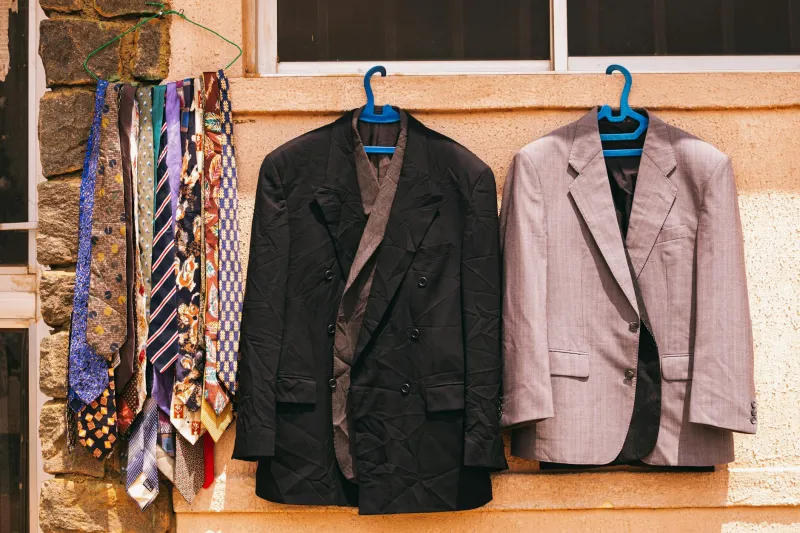
A decent suit in 1970 cost about $75, roughly $550 in today's money. Most men owned two — one for work, one for everything else. Women's wardrobes followed similar logic: a good dress, a church dress, and work clothes that were still presentable for running errands.
Americans spent a higher percentage of their income on clothing then, but they bought fewer pieces and expected them to last. A suit was an investment, not a seasonal purchase. Tailoring was common, shoe repair was standard, and looking good required planning.
The airline industry actively encouraged formal dress through advertising and policies. Pan Am's "Fly in Style" campaigns showed passengers in evening wear, suggesting that air travel was inherently glamorous. Some airlines even had dress codes — no shorts, no flip-flops, no exceptions.
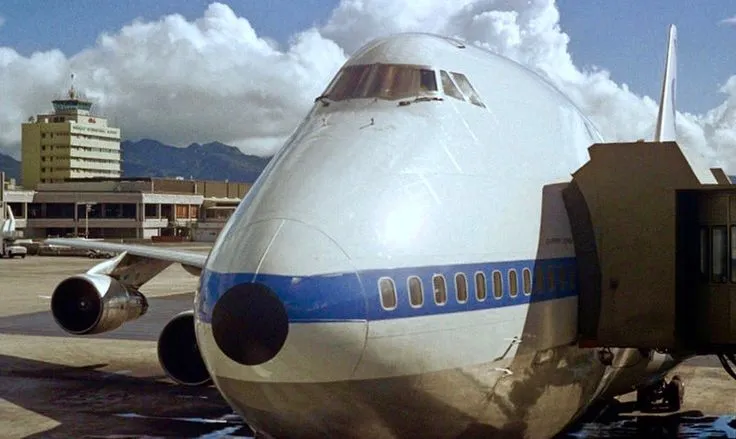 Photo: Pan Am, via i.pinimg.com
The Great Casual Revolution
The change didn't happen overnight. It started in California during the 1960s, spread through college campuses in the 1970s, and reached corporate America in the 1980s with the invention of "business casual." Each decade loosened the rules a little more.
By 1990, airlines stopped expecting passengers to dress up — comfort became the priority for increasingly cramped flights. Retail stores welcomed customers in any attire as competition intensified. Banks installed ATMs that eliminated the need for face-to-face transactions in formal lobby settings.
The internet accelerated everything. Why dress up to shop when you could browse from home in pajamas? Why wear a suit to the bank when you could deposit checks by phone? Each digital convenience chipped away at another reason to put on real clothes.
What Comfort Cost
Today's airport terminals look like college dormitories — flip-flops, sweatpants, and tank tops as far as the eye can see. Department stores welcome shoppers in athletic wear and pajama bottoms. Even upscale restaurants have relaxed dress codes to avoid seeming stuffy.
We gained comfort and convenience, but we lost something harder to measure: the shared understanding that public spaces deserved public effort. When everyone dressed up to go out, it created a sense of occasion, of mutual respect, of civic participation.
The casual revolution also democratized public spaces in ways that weren't entirely positive. When appearance no longer mattered, other forms of status competition intensified — the brand of your sneakers, the model of your phone, the labels on your athleisure wear.
The Athleisure Exception
Interestingly, Americans still dress up — we just do it differently. A good pair of Lululemon leggings costs more than a 1970s dress. Premium sneakers rival the price of dress shoes. We've replaced the suit with the workout outfit, but we're still signaling status through clothing choices.
The difference is that athletic wear suggests we're always ready for action, always optimizing, always on our way to or from something more important. The old formal dress code suggested that being here, now, in this moment, was important enough to deserve your best effort.
The Zoom Paradox
The COVID-19 pandemic created a strange hybrid — the "business on top, pajamas on bottom" uniform of video calls. Millions of Americans rediscovered the ritual of putting on a proper shirt for work, even if nobody could see their sweatpants.
This accidental experiment revealed something we'd forgotten: getting dressed changes how we feel about ourselves and how seriously we take what we're doing. The clothes really do make the man — and the woman, and the occasion.
When Everywhere Was Somewhere Special
The old dress codes weren't about oppression or pretension — they were about transformation. Putting on your good clothes meant stepping into your public role, becoming the best version of yourself for the few hours you'd spend among strangers.
When flying meant dressing up, the journey felt important. When shopping required real clothes, the experience had weight. When every public appearance demanded effort, Americans took public life more seriously.
We're more comfortable now, more efficient, more practical. But we're also more isolated, more casual about shared spaces, and perhaps a little less careful about the impression we make on each other.
Sometimes progress isn't about moving forward — it's about remembering what we left behind and deciding whether it was worth keeping.