America's $24 Billion Storage Habit — When Keeping Everything Became More Important Than Having Enough Space to Live
The Industry That Didn't Exist
In 1970, there were fewer than 300 self-storage facilities in the entire United States. Most Americans had never heard the term "storage unit," and the few that existed served a narrow purpose: temporary housing for belongings during a move or military deployment.
Today, America has more than 60,000 storage facilities — more than the number of McDonald's, Starbucks, and Walmarts combined. We've built enough storage space to house the entire population of Switzerland, and we're still building more.
The self-storage industry now generates $24 billion annually, making it one of the fastest-growing sectors of American real estate. We've quietly become a nation that pays rent for the privilege of not throwing things away.
How did America accumulate so much stuff that we need separate buildings to store it?
When Everything You Owned Fit Where You Lived
Walk through any American home built before 1950, and you'll notice something: there's almost no storage space. A few closets, maybe a basement or attic, and that's it. Our ancestors designed homes this way because they didn't need storage space — they simply owned less stuff.
The average American family in 1950 owned about 3,000 items. Today's families own closer to 300,000 items. We've increased our possessions by 10,000 percent in seventy years, while our homes have grown by only 200 percent.
The math doesn't work, so we invented a solution: rent space somewhere else to store what doesn't fit.
The Great Accumulation
Several forces converged to create America's storage crisis, but the most significant was the shift from a repair culture to a replacement culture. Previous generations fixed things when they broke, so they needed fewer backup items. When your toaster stopped working, you took it to the repair shop. When your shoes wore out, you took them to the cobbler.
Modern Americans replace things when they break — or when they become slightly outdated. But we don't throw away the old items immediately. Instead, we store them "just in case" or because they "still have some life left."
Storage units are filled with broken exercise equipment that might be worth fixing someday, outdated electronics that could be valuable eventually, and clothes that might come back in style. We've become a society of optimistic hoarders, convinced that everything we own will someday be useful again.
The Shrinking Home Paradox
Here's where the storage story gets interesting: American homes are actually larger today than they were fifty years ago. The average new home in 1973 was 1,660 square feet. Today's average new home is 2,480 square feet.
So why do we need external storage if our homes are bigger?
The answer lies in how we use space. Homes in the 1950s were designed around function — rooms had specific purposes and were furnished accordingly. Today's homes are designed around lifestyle, with open floor plans that prioritize aesthetics over storage.
We traded closets for great rooms, basements for bonus rooms, and attics for cathedral ceilings. Modern homes look more spacious but actually provide less storage space per square foot than their predecessors.
The Real Estate That Nobody Lives In
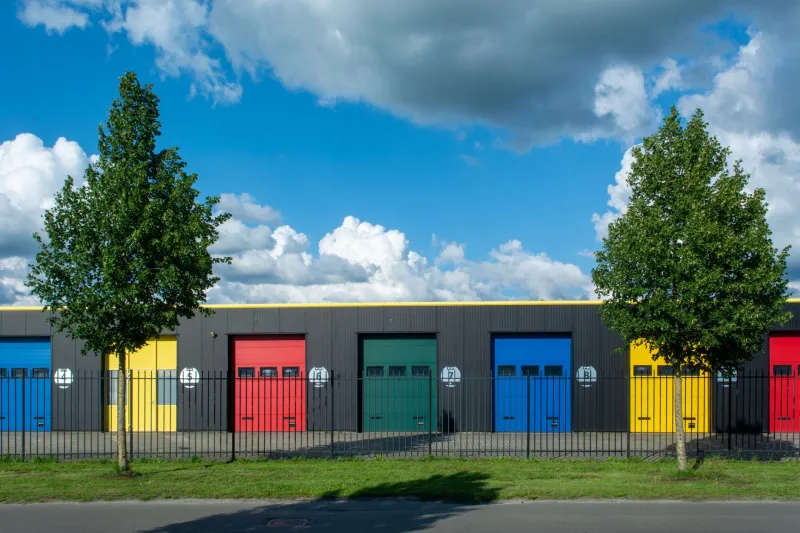
Drive through any American suburb and you'll see them: sprawling complexes of identical roll-up doors stretching for acres. These storage facilities represent some of the most valuable real estate in America — land that could house families instead houses their excess possessions.
In cities like San Francisco and New York, where housing costs have reached crisis levels, storage facilities occupy prime real estate that could accommodate hundreds of apartments. We've prioritized space for our stuff over space for our neighbors.
 Photo: New York, via wallpapercave.com
 Photo: San Francisco, via www.fodors.com
The average storage unit rents for $90 per month — $1,080 per year. Many Americans pay more to store their possessions than people in other countries pay for housing.
The Subscription Model for Stuff
The self-storage industry has perfected the subscription economy model that tech companies would later adopt. Most customers rent storage units with the intention of using them temporarily, but the average rental period is 14 months. Many customers keep paying for storage long after they've forgotten what they're storing.
Storage companies count on this pattern. They make their highest profits from customers who rarely visit their units but continue paying monthly fees out of habit or avoidance. It's a brilliant business model: sell people space to store things they don't need, then profit from their reluctance to deal with those things.
What's Actually in There
Studies of storage unit contents reveal the psychology of American accumulation. The most common items include:
- Furniture from previous homes that doesn't fit current homes
- Seasonal decorations used once per year
- Exercise equipment purchased with good intentions
- Children's toys and clothes they've outgrown
- Electronics that still work but have been replaced
- Books, records, and movies replaced by digital alternatives
- Sentimental items with unclear future purpose
Most storage units contain nothing that would be difficult or expensive to replace. They're filled with the material residue of American consumer culture — things we bought, used briefly, and couldn't bear to discard.
The Inheritance Problem
One of the fastest-growing segments of the storage industry serves adult children who inherit their parents' possessions. Previous generations accumulated less stuff, but what they owned was often valuable and built to last. Today's inheritors find themselves responsible for china sets, furniture, and decorative items that have sentimental value but no practical purpose in modern homes.
Storage units have become America's solution to inheritance anxiety — a way to honor our parents' memory without cluttering our own lives. But paying monthly rent to store unused heirlooms represents a fundamental misunderstanding of what our parents actually valued about their possessions.
The Environmental Cost
The self-storage industry represents one of the most environmentally destructive aspects of American consumer culture. We're using vast amounts of land, construction materials, and energy to house possessions that serve no active purpose in our lives.
Meanwhile, millions of Americans live in overcrowded housing or can't afford housing at all. We've created a system where storage space for unused possessions is more accessible than living space for people who need homes.
The European Alternative
Most European countries have minimal self-storage industries, not because Europeans own less stuff (though they do), but because their housing and consumer cultures developed differently. European homes typically include more built-in storage, and European consumers are more likely to sell or donate items they no longer use.
The concept of paying monthly rent to store unused possessions strikes many Europeans as fundamentally irrational — like paying for a gym membership you never use, except the membership lasts for years.
What We're Really Storing
The self-storage industry isn't really about storage — it's about avoidance. We're paying to avoid making decisions about what we actually need, what truly has value, and what we're ready to let go of.
Every storage unit represents dozens of deferred decisions. The exercise bike we might use again. The college textbooks we might reference someday. The furniture that might work in our next home. The children's artwork that might be important to preserve.
But decision avoidance has a cost, and we're paying it monthly.
The Simple Solution
Our grandparents had a different relationship with possessions. They owned fewer things, but they used what they owned. When something stopped being useful, they gave it away or threw it away. They didn't have storage units because they didn't need storage units.
This wasn't because they were less sentimental or less prosperous — it was because they understood that possessions should serve life, not the other way around.
The self-storage industry has convinced Americans that keeping everything is normal, but it's actually a recent and expensive innovation. Previous generations understood something we've forgotten: the best storage solution for things you don't need is not having them at all.
The most liberating realization about storage units might be this: almost everything in them could disappear tomorrow, and your life would be exactly the same. We're paying billions of dollars annually to store things we've already forgotten we own.
That's not storage — that's expensive nostalgia. And America can't afford to keep paying rent on its reluctance to let go.