Twisted Metal and Skinned Knees — When America's Playgrounds Actually Prepared Kids for Life
The Playground That Could Actually Hurt You
Walk through any American neighborhood built before 1980, and you'll still find the concrete foundations. Square patches in the ground where massive steel structures once stood — the skeletal remains of playgrounds that could genuinely injure a child.
These weren't accidents waiting to happen. They were accidents that happened regularly, and somehow, that was considered normal. The twelve-foot-tall monkey bars weren't just tall; they were positioned over packed dirt or, if you were lucky, a thin layer of sand. The merry-go-round could spin fast enough to generate actual centrifugal force. And those metal slides? In summer, they could literally burn your legs.
Your parents knew this. Every parent in America knew this. And they let you play anyway.
When Risk Was Part of the Point
The philosophy behind 1960s and 70s playground design wasn't ignorance — it was intentional. Playground equipment manufacturers and child development experts believed that manageable physical risk was essential to childhood development. Kids needed to learn to assess danger, calculate risk, and experience the consequences of poor judgment in an environment where the stakes were real but not life-threatening.
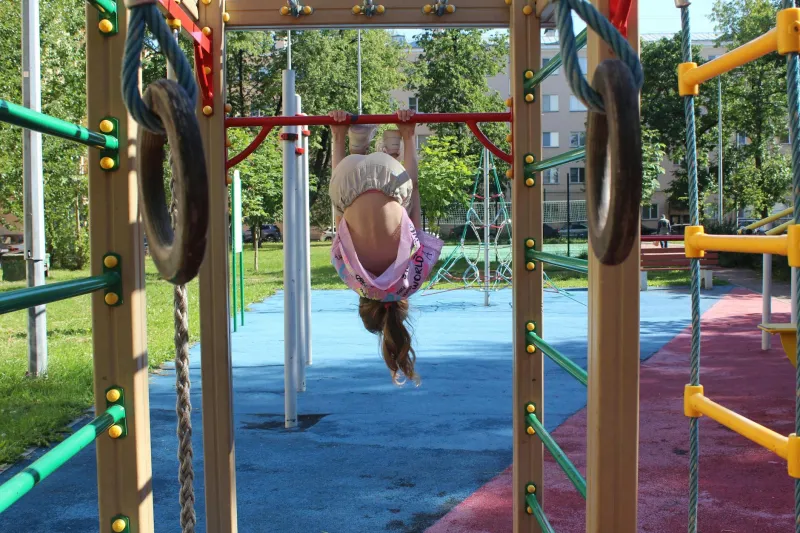
A skinned knee from falling off the monkey bars taught balance and grip strength. Getting dizzy on the merry-go-round taught you about momentum and your own physical limits. The tall slide required you to overcome fear and develop confidence in your own abilities.
The playground was essentially a training ground for adult decision-making, disguised as fun.
The Liability Revolution
Everything changed in the 1980s, but not because children suddenly became more fragile. The shift happened in courtrooms and insurance offices, where the cost of playground injuries began to outweigh the perceived benefits of adventurous play.
Municipal governments faced lawsuits over every broken bone and concussion. Insurance premiums for public playgrounds skyrocketed. Suddenly, the twelve-foot monkey bars weren't just a childhood challenge — they were a financial liability that could bankrupt a small town.
The response was swift and comprehensive. Out went the tall structures, the fast-spinning equipment, and anything that could generate serious momentum. In came the rubber surfaces, the low-to-the-ground climbing structures, and the carefully engineered play equipment designed to minimize every possible injury.
The New Playground Math
Today's American playground is a marvel of safety engineering. Every piece of equipment is tested to eliminate sharp edges, pinch points, and fall hazards. The rubber surfaces can cushion a fall from heights that would have sent 1970s kids home with genuine injuries. Age-appropriate design ensures that equipment matches the developmental capabilities of its intended users.
The result? Playground-related emergency room visits have dropped dramatically. Serious injuries are rare. Lawsuits against municipalities have nearly disappeared.
But something else disappeared too.
What We Lost in Translation
Modern playgrounds are undeniably safer, but they're also fundamentally different in their relationship to risk and challenge. Where previous generations learned to navigate genuine physical danger in a controlled environment, today's children experience play that's been pre-screened to eliminate most opportunities for failure.
The ten-foot slide became a four-foot slide. The monkey bars that required genuine upper body strength became climbing structures with safety nets. The merry-go-round that could launch you across the playground became a gently rocking spring-mounted animal.
Each change made individual sense from a safety perspective. Collectively, they transformed the nature of childhood play from an arena of managed risk to an environment of managed safety.
The Helicopter Generation Gap
Parents who grew up on dangerous playgrounds now watch their children navigate equipment designed to prevent the very experiences that shaped their own development. The cognitive dissonance is real: knowing that you survived and thrived on playground equipment that would be considered criminally negligent today.
This isn't nostalgia for broken bones and emergency room visits. It's recognition that the process of learning to manage physical risk — of falling, getting hurt, and getting back up — might have been more valuable than we realized when we eliminated it.
The Unintended Consequences
Child development experts now worry that risk-averse playground design has contributed to a generation less comfortable with physical challenge and more dependent on adult supervision. When every potential danger is engineered away, children don't develop the same intuitive sense of their own physical capabilities and limitations.
The irony is that in making playgrounds perfectly safe, we may have made childhood less prepared for the inherently unsafe nature of adult life.
Beyond the Playground
The transformation of American playgrounds reflects a broader cultural shift in how we think about risk, liability, and childhood development. The same mindset that eliminated dangerous playground equipment has influenced everything from school policies to parenting styles to youth sports.
We've created the safest generation of children in American history. Whether we've also created the most capable remains an open question.
The old playgrounds are gone, along with their twisted metal and potential for skinned knees. What remains is the question of whether we eliminated genuine danger or simply relocated it to a place where children are less equipped to handle it: the rest of their lives.