Everybody Watched the Same Thing — And That Was the Whole Point
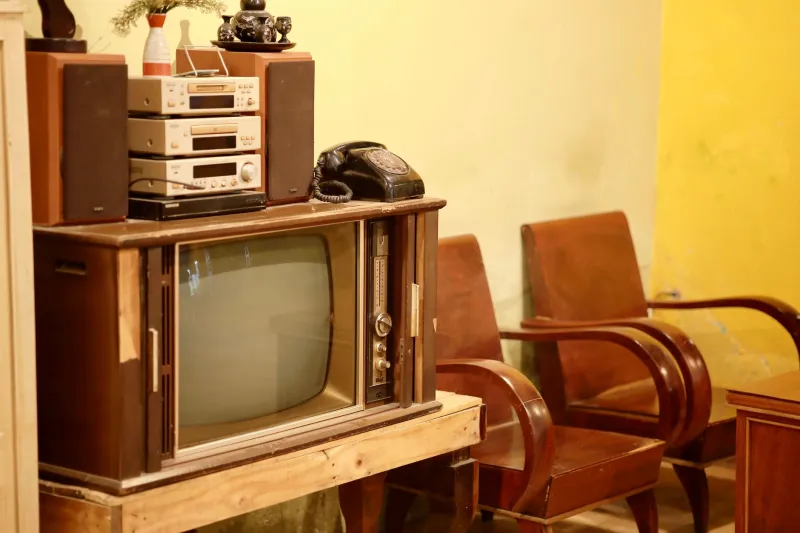
On a weeknight in 1978, somewhere between 80 and 100 million Americans sat down to watch the same television program. Not because it was mandatory, not because there was nothing else going on — but because there genuinely wasn't anything else on. Three networks. A handful of local channels. A set schedule printed in the TV Guide that arrived with your Sunday paper. The remote control, if you had one, was a luxury. The television itself was probably the heaviest object in the living room.
This is not a story about how everything was better back then. It's a story about what scarcity does to culture — and what happens when you remove it entirely.
The Three-Channel World
For most of American television history, the viewing landscape was defined by three broadcast networks: ABC, NBC, and CBS. PBS existed on the fringes. Local stations filled in the gaps with reruns, local news, and the occasional Saturday morning cartoon block. Cable television existed in some markets by the early 1970s, but widespread cable access didn't arrive until the 1980s, and even then it took years to penetrate most households.
The result was a shared media diet unlike anything that exists today. When M*A*S*H aired its series finale in February 1983, 106 million Americans watched it — a record that still stands as the most-watched single television broadcast in US history. Not because the show was universally loved, but because it was on, it was the thing people watched, and watching it together was part of the experience.
The rhythm of television was built into the week. Monday night had football. Thursday had must-see lineups. Friday was a signal that the weekend was starting. Saturday mornings belonged entirely to children. These weren't just programming decisions — they were cultural calendars that structured how American families moved through their time.
Boredom Was Part of the Deal
Here's the part nobody talks about: a lot of the programming was genuinely bad. Variety shows that ran too long. Local news that stretched to fill the hour. Made-for-TV movies that nobody asked for. Reruns in the summer that you'd already seen twice. There were evenings when you flipped through all three channels, found nothing worth watching, and either turned the television off or sat there watching something mediocre because the alternative was doing nothing.
And that was fine. The boredom was part of the structure. It pushed people toward other things — conversations, board games, books, early bedtimes. Television was a reward that had natural limits. You watched what was on, you enjoyed what you could, and the rest of the evening was yours by default.
The constraints also created genuine appointment viewing. If you missed an episode of a show you loved, you missed it. There was no catch-up option, no streaming queue, no DVR. You either made time for it or you didn't — and if you didn't, you heard about it the next day from everyone who did. This created a shared cultural currency. Talking about last night's TV was a legitimate social exchange, because last night's TV was the same for almost everyone.
What Infinite Choice Actually Delivered
The cable explosion of the 1980s and 90s began fragmenting the audience. MTV, ESPN, CNN, HBO — each pulled viewers away from the shared broadcast experience and toward increasingly specific interests. By the time Netflix introduced streaming in 2007 and began producing original content in 2013, the old model was effectively finished.
Today, the average American household has access to thousands of hours of content across dozens of streaming platforms. The quality, by almost any measure, has never been higher. Peak television — The Sopranos, Breaking Bad, Succession, The Bear — represents genuine artistic achievement that the three-network era couldn't have produced. The storytelling is more complex, the budgets are larger, the range of subjects and perspectives is vastly wider.
But the shared experience is gone. When a prestige drama drops all at once on a streaming platform, some people watch it the first weekend, some get to it three months later, and some never watch it at all. Spoiler culture has become a genuine social negotiation. Conversations about television now require a careful inventory of who has seen what, up to which episode, and whether they want to know what happens next.
More quietly, the infinite menu has introduced a new kind of exhaustion. Decision fatigue is real, and the streaming era has built an entire genre of it. Scrolling through options for twenty minutes before settling on something familiar, or giving up and rewatching a show you've already seen, has become a recognizable modern experience. The paradox of choice — the idea that more options can actually reduce satisfaction — plays out nightly in living rooms across the country.
The Thing the Schedule Was Actually Doing
The three-channel era's most underrated feature wasn't the programming. It was the structure. A fixed schedule meant that television consumption had natural stopping points. The news came on at eleven. After that, there was a late show, and then the broadcast day ended — literally ended, with a sign-off and a test pattern until morning. The television told you when it was done with you.
Streaming platforms are designed around the opposite principle. The next episode loads automatically. The algorithm surfaces something new before you can decide to stop. The goal is continuous engagement, and the architecture of the experience reflects that goal at every level.
None of this is villainous — it's just business. But it's worth understanding what we traded away. The boredom of three channels wasn't a flaw in the system. It was a feature that nobody recognized as valuable until it was engineered out of existence.
And somewhere in that loss is a version of Tuesday night that 80 million people shared simultaneously — not because it was great, but because it was the same. That kind of togetherness doesn't have a streaming equivalent. You can't algorithm your way back to it.