When Nothing Had a Price Tag: The Lost World of American Bargaining
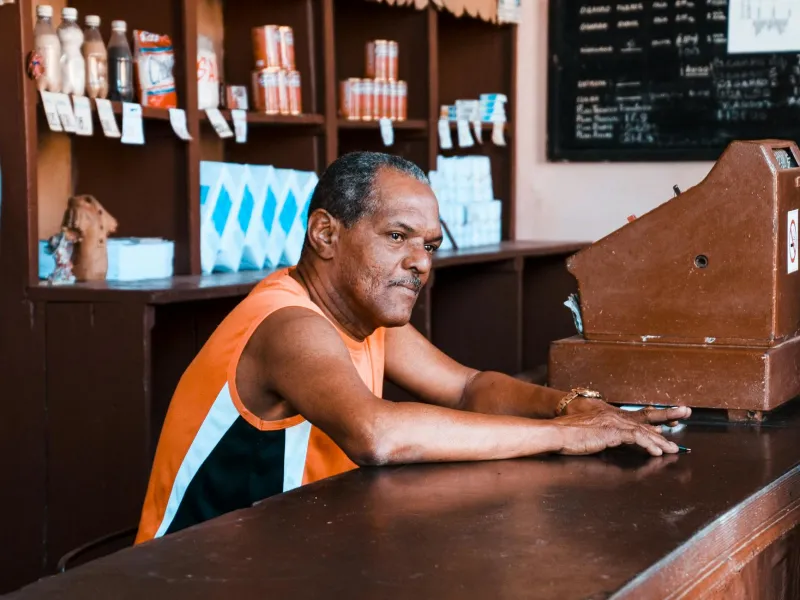
Walk into any American store today, and the ritual is identical: grab what you want, check the price tag, pay the amount listed. The idea of asking "What's your best price?" on a washing machine at Sears or haggling over a hospital bill seems almost absurd. But for most of American history, that conversation was the norm, not the exception.
When Every Store Was a Negotiation
In 1920s America, price tags were more like opening bids. Your local furniture dealer expected you to counter his initial offer. The neighborhood grocer might throw in an extra pound of flour if you were buying for a large family. Even major department stores employed salespeople with the authority to adjust prices on the spot.
The practice wasn't just about getting a better deal — it was woven into the social fabric of commerce. Store owners knew their customers personally. They understood that Mrs. Johnson was struggling since her husband got laid off from the factory, or that the Millers always bought in bulk and deserved a quantity discount. Pricing was personal, flexible, and often based on relationships that stretched back years.
This wasn't limited to small-town general stores. Even in major cities, haggling was expected at furniture stores, appliance dealers, and specialty shops. A 1935 survey found that over 60% of non-grocery retail transactions involved some form of price negotiation.
The Chain Store Revolution Changes Everything
The transformation began in the 1920s and accelerated after World War II. Chain stores like Woolworth's, A&P, and later Sears revolutionized American retail with a radical concept: fixed prices, clearly marked, the same for everyone.
This wasn't just a business strategy — it was a social statement. Fixed pricing promised fairness and efficiency. No more wondering if you paid more than your neighbor. No more awkward negotiations. Just grab, pay, and go.
The shift gained momentum because it solved real problems. Chain stores could process customers faster, reduce training costs for staff, and eliminate the inconsistencies that came with individual negotiations. By the 1950s, the die was cast. Fixed pricing became the American way.
What We Actually Lost
The disappearance of everyday haggling represented more than just a change in shopping habits — it fundamentally altered the relationship between buyers and sellers in America.
Before fixed pricing, every purchase was an opportunity for human connection. Customers developed relationships with shopkeepers who remembered their preferences, their financial situations, and their families. These relationships often extended beyond commerce into genuine community ties.
The old system also provided a form of natural price discrimination that could benefit customers. A merchant might charge wealthy customers full price while quietly offering discounts to those who needed them. This informal system of sliding scales disappeared when everyone paid the posted price.
Perhaps most significantly, Americans lost a valuable life skill. Negotiation became something you only did when buying a car or a house, rather than a routine part of economic life. Generations grew up never learning how to advocate for themselves on price, never understanding that many numbers in business are more flexible than they appear.
Where Haggling Survives — and Thrives
Despite the dominance of fixed-price retail, negotiation never completely disappeared from American commerce. It just moved to specific corners of the economy.
Car dealerships remained holdouts, preserving the old ways partly because vehicles are complex, high-value purchases where individual circumstances matter enormously. Real estate maintained its negotiation culture for similar reasons.
More surprisingly, many service industries never fully embraced fixed pricing. Medical bills, legal fees, and contractor estimates often function more like opening positions than final numbers. Many Americans don't realize that hospital billing departments routinely negotiate payment plans and sometimes reduce charges for patients who ask.
Even in traditional retail, cracks in the fixed-price system are appearing. Online marketplaces like eBay brought back auction-style pricing. Apps like Priceline let travelers bid on hotel rooms and flights. The "Make an Offer" button on platforms like Mercari and Facebook Marketplace has reintroduced millions of Americans to the lost art of price negotiation.
The Digital Age Brings New Complexity
Today's pricing landscape would be unrecognizable to someone from the 1940s. Instead of personal relationships determining price flexibility, algorithms now adjust prices in real-time based on demand, inventory levels, and individual shopping histories.
Amazon changes prices millions of times per day. Uber's surge pricing automatically adjusts based on supply and demand. Airlines use sophisticated yield management systems that can result in dramatically different prices for identical seats.
In some ways, we've come full circle — prices are once again fluid and personalized. But instead of human judgment and community relationships driving the variations, it's data analysis and profit optimization.
The Price of Progress
The shift from negotiable to fixed pricing brought undeniable benefits: efficiency, consistency, and the elimination of discrimination based on bargaining skills or social connections. Shopping became faster and more predictable.
But something valuable was lost in the transition. The art of negotiation, the personal relationships that came with repeated interactions, and the flexibility that allowed commerce to adapt to individual circumstances all faded away.
Today, as algorithms increasingly determine what we pay, it's worth remembering that for most of American history, price was just the starting point of a conversation, not the end of one. The gap between that world and ours reveals how much our relationship with money, merchants, and each other has fundamentally changed.