The Cereal Aisle That Changed Your Life — Before the Algorithm Decided What You'd Buy
Somewhere around 1987, a woman in suburban Ohio discovered a salsa she'd never heard of because it was sitting on an end cap next to the tortilla chips she always bought. She served it at a party. Her guests asked where she got it. She became, in her social circle, the person who knew about good salsa. That reputation stuck for years.
None of that happens in a browser window.
The American grocery store used to be, among other things, a discovery engine. Not a particularly efficient one — you might wander for twenty minutes looking for something you'd seen advertised and never find it — but an unpredictable one. The unpredictability was, in retrospect, most of the point.
What the Physical Store Actually Did
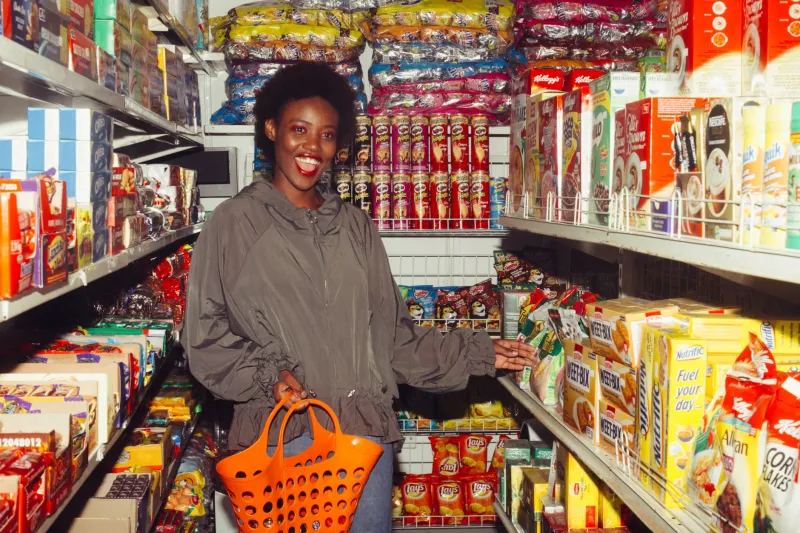
Walking the aisles of a supermarket in the 1970s, 80s, or 90s was a fundamentally different sensory experience than clicking through a website today. The store was arranged to create friction — not to frustrate you, but to expose you to things you hadn't planned to see. The dairy was at the back so you'd pass everything else. The seasonal displays rotated and surprised. The end caps featured products the store wanted to move, which meant you regularly encountered things that weren't on your list and had no reason to exist in your awareness.
You also talked to people. The butcher had opinions. The deli counter worker knew which cheese had just come in. The stockboy who was reorganizing the pasta section could tell you what was on sale that wasn't in the circular. These weren't formal consultations — they were the casual, low-stakes human exchanges that filled in gaps in your knowledge without you having to go looking.
And then there were the other shoppers. You'd see a cart piled with something you'd never tried and ask about it. You'd notice that the woman ahead of you in line had a brand of olive oil you'd never seen and make a mental note. Shopping was, in a minor but real way, a social act.
How the Algorithm Changed the Terms
Online grocery shopping and the broader rise of e-commerce platforms have delivered enormous convenience, and it would be dishonest to pretend otherwise. The ability to order from your couch, skip the checkout line, and have staples delivered to your door has genuinely improved the lives of busy families, people with mobility limitations, and anyone who's ever spent forty-five minutes in a parking lot at a Whole Foods on a Saturday afternoon.
But the trade-off is worth examining.
When you shop online, the platform already knows what you buy. It surfaces your previous orders first. It suggests items "based on your history." It builds a shopping experience around the version of you that existed last month — which is fine if you're buying dish soap, but limiting if you're actually open to something new. The recommendation engine is optimized to reduce friction and increase conversion, which in practice means it gets better and better at showing you exactly what you've already decided you want.
That's a fundamentally different relationship with discovery than the cereal aisle offered.
The Shrinking of the Consideration Set
In marketing, there's a concept called the "consideration set" — the range of options a consumer actually thinks about when making a purchase. Physical retail, at its best, expanded your consideration set by putting unfamiliar things in your path. E-commerce, by design, tends to narrow it.
This has real financial consequences. Americans who shop primarily online often end up in brand loyalty loops they didn't consciously choose — buying the same products repeatedly not because they've evaluated the alternatives, but because the platform never surfaced them. The algorithm isn't neutral. It's optimized for repeat purchase behavior, which benefits the platform and the dominant brands, not necessarily the consumer.
Small food producers and regional brands — the kind that used to get their break from a well-placed end cap in a regional grocery chain — now have to fight for algorithmic visibility against established players with massive ad budgets. The playing field that the physical store created, imperfect as it was, has been replaced by a digital environment where visibility is purchased rather than earned through product quality.
What Impulse Buying Was Actually About
Impulse buying gets a bad reputation, and sometimes deservedly so. But not every unplanned purchase is a failure of self-control. A lot of the best products Americans have ever discovered arrived in their lives as impulse buys — a snack that became a household staple, a spice blend that changed the way someone cooked, a brand of coffee that replaced the one they'd been buying out of inertia for a decade.
The physical store created the conditions for those discoveries. The algorithm, for all its sophistication, mostly doesn't. It's very good at giving you what you want. It's not particularly interested in showing you what you didn't know you wanted.
The Store as a Third Place
For many Americans — particularly in smaller towns and suburbs — the grocery store was also a social space. You ran into neighbors. You saw your kids' teachers. You had the kind of brief, unremarkable conversations that form the connective tissue of community life. That function has eroded as online ordering has grown, and it's harder to quantify than price comparisons or delivery windows, but it's a real loss.
The grocery store wasn't just a place to buy food. It was a place where your community's tastes, habits, and personalities were on mild, constant display. Shopping alongside other people was a form of low-level cultural participation that the delivery box, efficient as it is, simply can't replicate.
The Gap Between Convenient and Good
None of this is an argument for making grocery shopping harder. Convenience is genuinely valuable, and the old model had real problems — limited hours, inconsistent stock, geographic inequity in access to quality food.
But it's worth being honest about what the shift has cost. The serendipity of the physical store — the unexpected find, the human recommendation, the product you never would have searched for because you didn't know it existed — that's not a small thing. It's part of how people form preferences, discover new habits, and occasionally stumble onto something that changes the way they eat, cook, or live.
The algorithm is very good at predicting who you were yesterday. The cereal aisle had a chance at showing you who you might become.