Your Phone Knows Everyone You've Ever Met — But Do You?
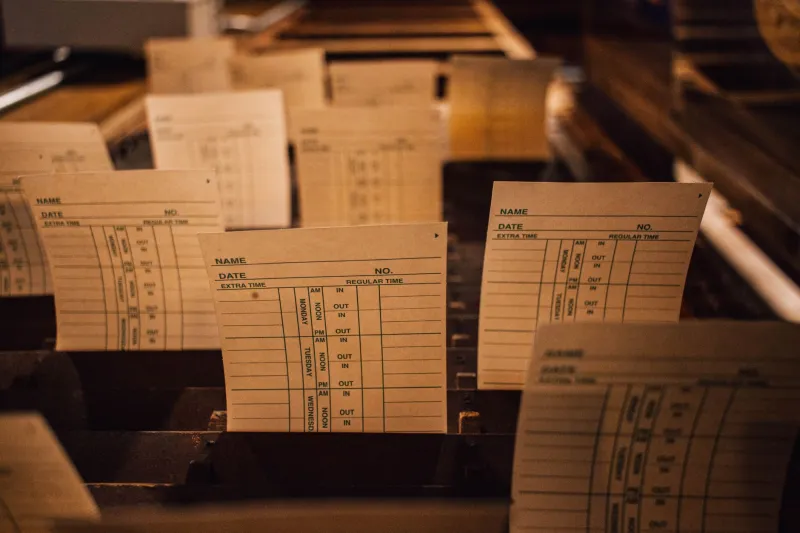
There's a small cardboard box in a lot of American attics that nobody talks about anymore. Inside it, if you're lucky enough to still have one, sits a Rolodex — that spinning rack of index cards that once held the most valuable information a person owned. Phone numbers. Addresses. The name of your dentist's receptionist. The direct line to the guy at the dealership who actually picked up.
It wasn't glamorous. But it was yours.
The Weight of a Phone Number
Before smartphones, before LinkedIn, before Facebook suggested you might know someone based on mutual friends and browsing habits, building a personal network was a deliberate act. You didn't accumulate contacts passively. You earned them.
Swapping numbers in the 1980s or 1990s meant something specific: I want to stay in touch with you. You'd write the number down — sometimes on a cocktail napkin, sometimes in a little address book you kept in a drawer — and then you'd transfer it somewhere permanent when you got home. That transfer was a small commitment. You were deciding, consciously, that this person was worth remembering.
The Rolodex sat on desks across corporate America as a physical representation of professional equity. The thicker the stack of cards, the wider your reach. Salespeople guarded theirs the way chefs guard recipes. When someone left a company and took their Rolodex with them, it was understood they were taking real value out the door.
Privacy was baked into the whole system. If someone wanted your contact information, they had to ask you for it directly. You could say no. You could give a work number instead of a home number. You controlled the exchange, every single time.
The Moment the Door Swung Open
The shift didn't happen all at once. First came cell phones and digital address books — convenient, sure, but still relatively contained. Then came social media, and the logic of connection changed entirely.
Suddenly the question wasn't do I want to stay in touch with this person? It was why wouldn't I connect with everyone I've ever met? LinkedIn arrived and told you your network was a professional asset you should be actively growing. Facebook told you that people from high school you hadn't spoken to in fifteen years were just one click away. The friction disappeared, and with it went the intentionality.
And while all of that was happening — while you were busy accepting friend requests and endorsing colleagues for skills you'd never witnessed firsthand — something else was going on underneath the surface. Your contacts list was becoming data. Valuable, tradeable, monetizable data.
What Your Address Book Is Actually Worth
This is where the finance angle gets uncomfortable. Every major social platform and many smartphone operating systems have, at various points, requested access to your contacts. The stated reason is always convenience — find friends faster, connect with people you already know. The unstated reason is that your network graph, the web of relationships your contact list represents, is extraordinarily useful to advertisers, data brokers, and analytics companies.
Your Rolodex, in the old days, had one reader: you. Today's digital equivalent is read by algorithms, scraped by third-party apps, and potentially sold in aggregated form to companies you've never heard of. A 2023 study by the Electronic Frontier Foundation found that contact data shared with apps is among the most commonly misused categories of personal information, precisely because people underestimate how revealing it is.
Who you know says a lot about who you are. Your income bracket. Your profession. Your political leanings. Your health situation. Advertisers pay real money for that kind of inference.
More Connections, Less Connection
Here's the paradox that sits at the center of all this. Most Americans today have more "contacts" than any previous generation in history. The average LinkedIn user has somewhere between 300 and 500 connections. Facebook users average around 338 friends. By raw numbers, we are the most networked people who have ever lived.
And yet study after study — from Cigna's loneliness surveys to research published in the American Journal of Preventive Medicine — keeps finding that Americans report fewer close friends and deeper feelings of isolation than they did in the 1980s and 1990s.
The Rolodex era forced a kind of quality control. You simply couldn't maintain 400 active relationships using index cards and landlines. You had to choose. The people in that little spinning rack were people you'd actually called, actually visited, actually knew. The limitation was the feature.
Getting Something Back
None of this means smartphones are bad or that digital networking has no value. The ability to reconnect with a college roommate, to find a job through a LinkedIn introduction, to stay close with family across time zones — these are real gains, and it would be dishonest to pretend otherwise.
But there's a growing movement — quiet, not particularly techy — of people who are auditing their digital contact lists the way previous generations audited their finances. Deleting apps that request contact access. Reviewing privacy settings. Thinking twice before syncing an address book to a new platform.
It's the modern equivalent of not handing your Rolodex to a stranger.
The gap between then and now isn't just about technology. It's about who owned the relationship. In the index-card era, you did. Today, the answer to that question is a lot murkier — and a lot more expensive than most people realize.