You Used to Be Able to Go Home and Actually Leave — The Day We Traded Privacy for a Signal Bar
Once a year, usually in the fall, a thick yellow book landed on your doorstep with a satisfying thud. The phone directory. It listed your name, your address, and your number — and that was the entire infrastructure of how strangers could reach you. If you weren't in the book, you were, for all practical purposes, invisible. And if you were in the book, you were still only reachable when you were physically standing next to your phone.
That world is almost impossible to explain to anyone who grew up with a smartphone. But for a few decades in the middle of the twentieth century, Americans had something genuinely rare: the ability to disappear after five o'clock.
The Architecture of Being Unreachable
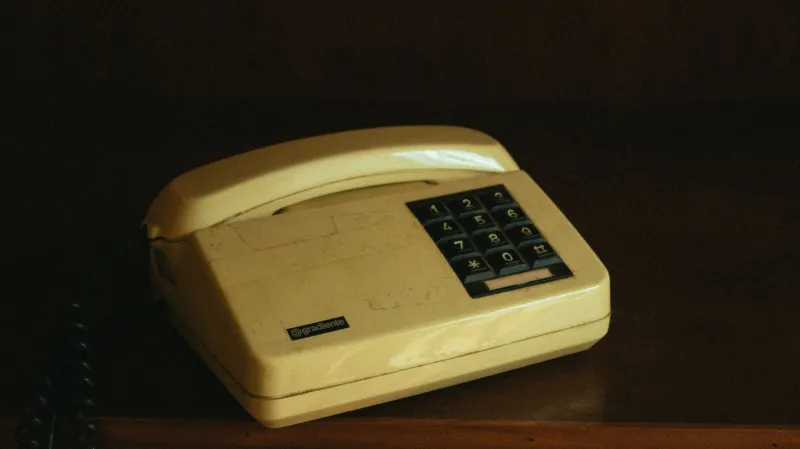
The landline era had natural limits built into it, and those limits created a kind of freedom that nobody fully appreciated until it was gone. Your phone was tethered to a wall. It rang in a specific room. If you weren't home, it rang into silence — no voicemail until the late 1980s, no answering machine in most homes until the mid-70s. Missing a call wasn't a failure. It was just life.
The phone book itself was a once-a-year snapshot of who lived where. Unlisted numbers existed for people who wanted extra privacy, but even listed residents enjoyed a baseline of obscurity. Your number was in the book, sure — but finding it required someone to already know your last name and have a rough idea of where you lived. Cold outreach was genuinely difficult. Telemarketers existed, but they were working against friction at every step.
Beyond the directory, the social contract around availability was completely different. Calling someone at home in the evening was considered an intrusion if you didn't know them well. Calling after nine o'clock at night was borderline rude. Calling someone at work for a personal matter was unusual. There were understood hours during which contact was appropriate — and long stretches of every day when you simply weren't expected to be available to anyone outside your immediate household.
The Transition Nobody Fully Agreed To
The shift happened in stages, and each stage felt like progress. Pagers in the 1980s let employers reach people outside business hours — initially just doctors and emergency workers, then gradually everyone. The first mobile phones were expensive, bulky, and rare. But by the late 1990s, cell phones were common enough that the expectation of reachability began to expand.
Email accelerated it further. Suddenly the workday had no natural endpoint. Messages could arrive at any hour, and the fact that they arrived created an implied obligation to respond. By the time smartphones arrived in the late 2000s, the architecture of availability had been completely rebuilt. You weren't just reachable — you were expected to be reachable, continuously, across multiple platforms simultaneously.
The phone book quietly disappeared. The last printed White Pages directories were phased out in most major US cities between 2010 and 2015. Nobody held a funeral, but something genuinely significant had ended.
What Constant Availability Actually Costs
The price of being always-on has been studied extensively, and the findings are fairly consistent. Employees who receive work messages outside business hours show higher rates of stress and burnout, even when they don't respond immediately. The mere awareness that a message might arrive is enough to keep the brain in a low-level state of alert — what researchers call "anticipatory stress."
Friendship has changed too. The phone book era had a built-in excuse for being out of touch: you simply hadn't spoken. Relationships operated on natural rhythms of contact — a call every few weeks, a letter, a visit. Today, the visibility of someone's online status, their last-seen timestamp, their story view on Instagram, all create a new kind of social accounting. Not responding quickly reads as a choice rather than a circumstance. Silence has become a statement.
Personal privacy has shifted in ways that go well beyond who can call you. Data brokers now compile and sell personal profiles that make the phone book look quaint — current address, past addresses, family members, estimated income, purchasing behavior, political affiliation. Opting out requires active, ongoing effort. The default is exposure.
The Quiet Value of Not Being Found
There's something worth mourning in the loss of ordinary inaccessibility. Not the extreme version — nobody is arguing for a return to the era when you couldn't call for help in an emergency, or when staying connected with people you loved required a stamp and three days of waiting. The genuine benefits of connectivity are real and significant.
But the phone book era had something that mattered: a default state of privacy. You had to actively choose to make yourself reachable beyond your immediate circle. Today, that equation has flipped entirely. You have to actively choose — and continuously maintain that choice — to carve out any space that's genuinely your own.
When that yellow book landed on your doorstep every fall, it represented the full extent of your public footprint. Your name. Your number. One line of text. And when you closed your front door at the end of the day, you were, by every practical measure, gone.
That feeling — of being genuinely off the grid without doing anything special to get there — is something an entire generation grew up with and never thought to miss until it disappeared completely.