Turn the Handle, Take a Drink — When Water Was Free and Nobody Thought That Was Strange
The Fountain on Every Corner
In 1970, you couldn't walk three blocks in any American city without encountering a drinking fountain. They stood sentinel outside post offices and inside department stores. Every school hallway had them positioned at child height. Parks featured elaborate multi-tiered models that could serve adults, children, and dogs simultaneously.
The concept was so basic it seemed permanent: clean, free water available to anyone who needed it. No payment required, no container necessary. Just walk up, push the button, and drink.
It was infrastructure so fundamental that most Americans never thought about it — until it started disappearing.
When Thirst Was a Public Problem
The golden age of American drinking fountains reflected a different understanding of public responsibility. City planners and building designers considered access to clean water a basic civic duty, like streetlights or sidewalks. Providing free hydration wasn't charity — it was good government.
This philosophy emerged from practical necessity. In an era when most Americans walked more and drove less, when air conditioning was luxury rather than standard, when workers spent more time outdoors, public thirst was a genuine public health issue.
Fountains weren't just convenient — they were essential urban infrastructure.
The Architecture of Hydration
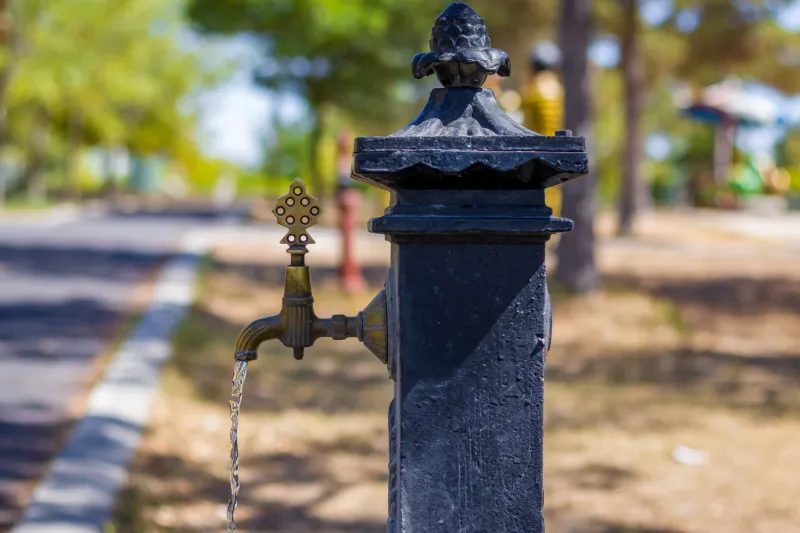
Mid-century drinking fountains were built like monuments. Heavy cast iron bases, solid brass fixtures, and refrigeration units that could chill water to perfect drinking temperature. Many featured artistic elements — decorative metalwork, carved stone bases, or ceramic tiles that turned functional infrastructure into public art.
These weren't cheap installations thrown up as afterthoughts. They were permanent civic investments, designed to serve generations of thirsty Americans. The best examples, found in train stations and government buildings, were genuine works of industrial design that celebrated the democratic ideal of free water for all.
Building codes required them. Architects planned around them. Maintenance departments serviced them like any other essential municipal system.
The Invisible Decline
The disappearance of drinking fountains happened so gradually that most Americans didn't notice until they were gone. It started in the 1980s with concerns about hygiene and liability. Public health officials worried about disease transmission. Building managers fretted about maintenance costs and vandalism.
One by one, fountains were removed rather than repaired. New construction simply omitted them. Existing units were disconnected and left as decorative relics or removed entirely.
By the 2000s, finding a working drinking fountain in many American cities had become a genuine challenge.
The Bottled Water Revolution
As public fountains disappeared, something remarkable happened in American retail: water became a product. In 1976, Americans consumed virtually no bottled water. By 2020, the average American drank over 40 gallons of bottled water annually.
This wasn't just market expansion — it was the creation of demand for something that had previously been free and ubiquitous. Companies like Evian, Perrier, and later Aquafina and Dasani convinced Americans that fountain water was somehow inferior to the same municipal water sold in plastic bottles.
The marketing was brilliant: transform a free public resource into a premium consumer product by questioning its quality, convenience, and safety.
The Psychology of Paying for Rain
The bottled water industry's success required Americans to fundamentally change their relationship with H2O. Water went from being a basic utility to a lifestyle choice. Plain water became "hydration." Tap water became questionable; bottled water became pure.
This transformation happened remarkably quickly. Within a single generation, Americans went from expecting free water everywhere to carrying individual water supplies and thinking nothing of paying $2 for 16 ounces of something that costs pennies per gallon from the tap.
The psychological shift was profound: we learned to see water scarcity where none existed and to distrust public systems that had served us reliably for decades.
The Infrastructure We Abandoned
The decline of drinking fountains represents more than just changing consumer preferences — it's the abandonment of public infrastructure in favor of private consumption. Where previous generations invested in shared resources that served everyone, we shifted toward individual solutions that serve only those who can afford them.
This pattern extends beyond water. Public restrooms, public seating, public phones — all have largely disappeared from American cities, replaced by commercial alternatives available only to paying customers.
The result is urban space that serves consumers rather than citizens.
The Environmental Reckoning
The environmental cost of replacing fountains with bottles is staggering. Americans now consume over 50 billion plastic water bottles annually. Less than 30% get recycled. The rest end up in landfills, oceans, or scattered across the landscape.
Meanwhile, the infrastructure to provide clean water to every American already exists — it's called municipal water systems. The same water that fills plastic bottles flows through taps and fountains in every American city.
We created an environmental crisis by abandoning a perfectly functional solution to a problem we'd already solved.
The Equity Question
When water access depends on individual purchasing power, it becomes a marker of economic inequality. In cities without public fountains, staying hydrated costs money — money that homeless individuals, low-income workers, and anyone without disposable income might not have.
The old fountain system was radically egalitarian: the same water, available to everyone, regardless of economic status. The bottled water system is inherently stratified: better hydration for those who can afford it, dehydration for those who can't.
This isn't just theoretical. Heat-related health emergencies disproportionately affect populations without reliable access to free water.
The Slow Return
Some American cities are rediscovering the value of public water access. New York City has installed hundreds of modern fountains. San Francisco requires new developments to include public water access. Environmental groups advocate for fountain installation as both public health and environmental policy.
 Photo: San Francisco, via 64.media.tumblr.com
 Photo: New York City, via i.pinimg.com
Modern fountain designs address many of the concerns that led to their decline. They're easier to maintain, more hygienic, and often include bottle-filling stations that serve both traditional fountain users and the bottle-carrying public.
But they're fighting against decades of cultural change that normalized paying for water.
The Lesson of the Lost Fountain
The rise and fall of American drinking fountains tells a larger story about how public goods become private commodities. It demonstrates how quickly Americans can be convinced to pay for something they once considered a basic right.
It also shows how infrastructure decisions shape behavior in ways we rarely consider. When cities stopped providing free water, Americans adapted by buying water. When buying water became normal, providing free water seemed unnecessary.
The cycle is self-reinforcing and difficult to reverse.
What We Gave Up
When we abandoned public drinking fountains, we gave up more than just free hydration. We gave up the idea that cities should provide for basic human needs without commercial transaction. We gave up infrastructure that served everyone equally. We gave up an environmental solution in favor of an environmental disaster.
Most importantly, we gave up the assumption that some things should be public goods rather than private products.
The water still falls from the sky for free. The difference is that we've convinced ourselves we need to buy it back, one plastic bottle at a time.