Built to Outlast Your Mortgage — When American Appliances Were Investments, Not Subscriptions
The Refrigerator That Refused to Die
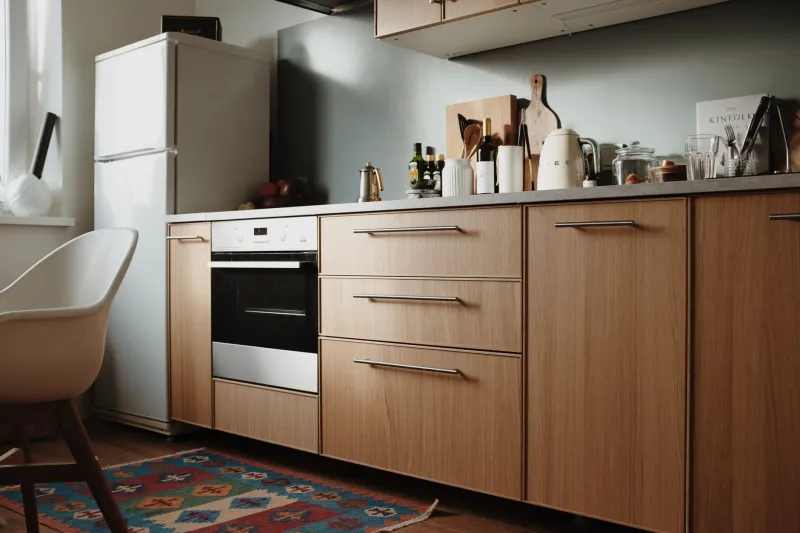
Somewhere in America, there's a 1964 General Electric refrigerator still keeping beer cold in a garage workshop. Its owner bought it new for $289 — roughly three weeks of take-home pay for the average worker. Sixty years later, it's outlasted four marriages, two house moves, and probably a dozen newer refrigerators.
Meanwhile, the $2,800 smart refrigerator you bought in 2021 is already flashing error codes, and the repair estimate exceeds what your grandfather paid for his entire kitchen.
Welcome to the great appliance swindle — how America convinced itself that machines designed to break were somehow progress.
When Repair Shops Outnumbered Coffee Shops
Walk through any American neighborhood in 1965, and you'd find something missing from today's streetscape: appliance repair shops. Not just one or two, but entire blocks lined with small businesses dedicated to fixing what was broken.
These weren't quaint throwbacks to a simpler time — they were essential infrastructure. When your Maytag washer developed a wobble or your Westinghouse oven stopped heating evenly, you didn't research replacement models on Consumer Reports. You called Eddie's Appliance Repair, and Eddie came to your house with a toolbox full of parts that actually fit.
The economics made perfect sense. That washing machine cost $179 in 1960 — about $1,800 in today's money. But it was built like a small tank, with components you could actually see, touch, and replace. The motor alone was designed to run for 25 years. Repair shops stocked parts because manufacturers expected their machines to need occasional fixes, not complete replacement.
The Planned Obsolescence Revolution
Something fundamental shifted in American manufacturing during the 1980s. Engineers stopped asking "How long can we make this last?" and started asking "How long does it need to last?"
The answer, it turned out, was just long enough to avoid lawsuits.
Today's appliances are marvels of efficiency and features. Your dishwasher has seventeen wash cycles, connects to WiFi, and sends notifications to your phone. It also has a circuit board that costs $400 to replace and a proprietary sensor that the manufacturer stops producing after five years.
The old Kenmore dishwasher in your parents' house has exactly one wash cycle: "clean the dishes." It's been doing that same job for thirty-two years without complaint.
The True Cost of Disposable Machines
Here's the math that appliance companies hope you never do:
Your grandparents bought a refrigerator in 1965 for $240. They used it until 1993 — twenty-eight years. Total cost per year: $8.57.
You've bought three refrigerators since 2010, spending roughly $2,400 each time. Total: $7,200 over fourteen years. Cost per year: $514.
Adjusted for inflation, your grandparents paid about $2,300 in today's dollars for nearly three decades of reliable refrigeration. You've paid three times that amount for half the lifespan.
The appliance industry calls this "innovation." Your bank account calls it something else.
When Repair Meant Relationship
There was something else lost when America abandoned repair culture: the relationship between consumer and craftsman. Your appliance repair guy wasn't just a service provider — he was a neighborhood fixture who understood that keeping your washing machine running meant keeping your family's routine intact.
Eddie knew that Mrs. Patterson always overloaded her dryer, so he'd show up with the specific belt that would inevitably need replacing every eighteen months. He knew that the Johnsons' kitchen outlet ran hot, so their mixer would need a new motor mount sooner than expected.
This wasn't just customer service — it was community infrastructure. The repair shop owner had invested in relationships, parts inventory, and specialized knowledge because both he and his customers expected appliances to be worth fixing.
The Smart Appliance Trap
Today's appliances promise convenience through connectivity, but deliver complexity through planned obsolescence. Your smart washing machine can text you when the load is finished, but it can't tell you why it stopped working three years after purchase.
The problem isn't just the technology — it's the business model. Modern appliance manufacturers make more money selling new units than supporting old ones. Software updates stop coming. Parts become "unavailable." Repair manuals are restricted to authorized technicians who charge more per hour than most Americans make.
Your grandmother's washer had a mechanical timer that could be rebuilt with basic tools. Your current washer has a computer that requires specialized diagnostic equipment and proprietary software to troubleshoot.
The Storage Unit Connection
Here's where the appliance story connects to a larger American problem: we're drowning in stuff that doesn't work and can't be fixed.
Drive through any American suburb and count the self-storage facilities. Many of them are filled with broken appliances that their owners couldn't bear to throw away but couldn't afford to repair. The dishwasher that died after four years. The refrigerator with the faulty ice maker. The dryer that makes noise but still technically works.
Previous generations didn't need storage units for broken appliances because their appliances didn't break — and when they did, fixing them cost less than replacing them.
What We Actually Lost
The shift from durable to disposable appliances represents more than just a change in manufacturing philosophy. It's a fundamental transformation in how Americans think about ownership, value, and waste.
We traded the satisfaction of owning something built to last for the anxiety of wondering when the next expensive replacement will be needed. We exchanged neighborhood repair shops for customer service phone trees. We swapped mechanical simplicity for digital complexity that nobody really understands.
Most importantly, we gave up the basic expectation that the things we buy should work as long as we need them to work.
The Real Innovation
The most innovative thing about 1960s appliances wasn't their technology — it was their honesty. A refrigerator was sold as a refrigerator, not a "kitchen ecosystem." A washing machine washed clothes, period. No apps, no subscriptions, no planned obsolescence disguised as features.
That Frigidaire humming in someone's garage represents something radical in today's throwaway economy: the revolutionary idea that things should be built to last, not built to break.
Your grandmother knew something we forgot — the cheapest appliance is the one you never have to replace.