When Saying Goodbye Cost Less Than a Month's Rent: How Death Became America's Most Expensive Obligation
When Saying Goodbye Cost Less Than a Month's Rent: How Death Became America's Most Expensive Obligation
There's a particular kind of cruelty in handing a grieving family a bill. Not because the people presenting it are heartless — most aren't — but because grief makes you vulnerable in ways that few other experiences do. You're not shopping. You're not comparing prices. You're just trying to honor someone you loved.
That vulnerability didn't always come with a price tag attached. For most of American history, death was handled close to home — literally. And the gap between what a funeral cost then and what it costs now is one of the starkest financial transformations in modern American life.
When the Neighbors Came Over and Got to Work
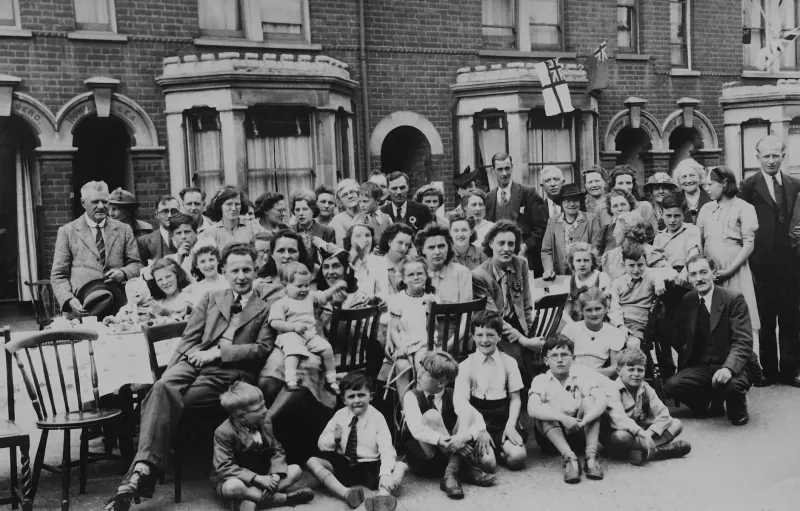
In the 19th and early 20th centuries, death in America was a community affair. When someone passed, the family didn't call a business. They called their neighbors. Women from the church or the block would come to wash and prepare the body. Men would build a simple wooden coffin, often from lumber already on the property. The deceased would lie in the front parlor — that's actually where the term "parlor" comes from — while family and friends filed through over the course of a day or two.
The burial itself usually happened in a local church cemetery or on family land. A preacher said the words. People brought food. Grief was shared, and so was the labor of it.
The financial cost of all this? Minimal. A basic coffin in the late 1800s might run a few dollars. Even into the early 20th century, a modest funeral could be arranged for under $100 — roughly equivalent to a few hundred dollars today when adjusted for inflation. That's not nothing, but it's a far cry from what families face now.
The Rise of the Funeral Industry
The shift started quietly around the Civil War era, when the need to transport soldiers' bodies home long distances created demand for embalming — a preservation technique that had previously been rare. Entrepreneurs saw an opportunity. Undertakers, who had existed mostly to build coffins and dig graves, began positioning themselves as full-service providers of something they called "funeral directing."
 Photo: Civil War, via myanmar.com
By the mid-20th century, the funeral home had become a fixture of American life. It was professional, it was dignified, and it quietly absorbed every task that communities had once handled themselves. Preparing the body, providing the casket, coordinating the service, arranging the burial — all of it moved under one commercial roof.
The industry also got very good at something else: making families feel that spending more was a form of respect. The idea that a simpler, cheaper option somehow reflected poorly on how much you loved the person you lost became deeply embedded in how funerals were sold — and bought.
What the Numbers Look Like Today
The National Funeral Directors Association puts the median cost of a funeral with viewing and burial at around $8,300. Add a burial vault, flowers, an obituary, a cemetery plot, and a headstone, and you're easily looking at $12,000 to $15,000 or more. In major metro areas, $20,000 isn't unusual.
 Photo: National Funeral Directors Association, via cdn-thumbnails.sproutvideo.com
For context, that's more than the average American has in savings. A 2023 Bankrate survey found that roughly 57% of Americans couldn't cover a $1,000 emergency expense from savings alone. The idea of absorbing a $10,000 funeral bill — while also dealing with the emotional weight of losing someone — is genuinely devastating for millions of families.
And the pressure is real. Funeral homes are required by the FTC's Funeral Rule to provide itemized price lists, but studies have repeatedly shown that grieving families rarely comparison shop. They walk into the first place they call, sit across from a sympathetic professional, and agree to things they might never agree to under different circumstances.
The Things We Stopped Doing Ourselves
What's striking isn't just the money. It's how completely the knowledge and practice of handling death moved out of American households.
For generations, people knew how to sit with the dying. They knew how to prepare a body. They knew what needed to happen in the days after someone passed. That knowledge lived in families and communities the same way recipes and repair skills did — passed down, practiced, understood.
When the funeral industry professionalized all of it, that knowledge didn't just become unnecessary. It became unfamiliar. Today, most Americans have never seen a body prepared for burial outside of a funeral home context. The idea of doing it yourself — which was simply called "burying your dead" for most of human history — feels almost transgressive now.
There's a small but growing movement pushing back on this. Home funerals, green burials, and death doulas are all gaining traction among Americans who want to reclaim some of what was lost. Several states have updated their laws to make family-directed funerals easier to arrange. But for most families, the default remains the full-service funeral home, and the default price tag comes with it.
The Grief Tax Nobody Talks About
There's a phrase that sometimes floats around personal finance circles: the "grief tax." It refers to the financial premium that gets charged — often invisibly — at the moments when people are least equipped to push back. Funerals are its purest expression.
The industry isn't villainous. Many funeral directors are genuinely compassionate people doing meaningful work. But the structure of the business — the timing, the emotional state of the customer, the absence of comparison shopping — creates conditions where costs can escalate without much resistance.
What changed most profoundly between the era of neighbor-built coffins and today isn't just the price. It's the relationship. Death used to be something a community absorbed together. Now it's something a family pays a company to manage. That transaction happens at the worst possible moment, with the least possible leverage, and the bill arrives before the grief has even had time to settle.
The gap between what an American funeral once cost and what it costs today isn't just a financial statistic. It's a measure of how much we've outsourced — and what we gave up when we did.