The Shelf That Held Everything Your Family Knew — Before Knowledge Stopped Costing Anything

There was a particular weight to those books. Not just physically — though a complete set of Britannica or World Book ran to twenty, twenty-five, sometimes thirty volumes and could genuinely strain a shelf — but psychologically. They sat in the living room or the den with a kind of quiet authority. They announced something about the household that owned them: that learning mattered here. That this family had made a decision.
And it was a decision. A real one, with real financial stakes.
What It Actually Cost to Know Things
A complete set of encyclopedias in 1970 ran roughly $400 to $600 — the equivalent of somewhere between $3,000 and $4,500 today when you adjust for inflation. That wasn't an impulse purchase. That was a deliberate, budgeted, sometimes installment-plan commitment. Families spread the payments over months. Some saved for it the way they saved for a new refrigerator.
The door-to-door encyclopedia salesman — a figure so embedded in mid-century American culture that he became almost a cliché — understood exactly what he was selling. He wasn't selling paper and ink. He was selling a parent's belief in their child's future. He was selling the idea that the right information, available at home, at any hour, without a trip to the library, could give a kid an edge. Could answer the question that came up at ten o'clock on a school night. Could transform curiosity into knowledge without friction.
And parents bought it. Millions of them. Not because they were naive, but because they were serious.
The Ritual of Looking Something Up
There was a specific experience to using an encyclopedia that no one born after 1995 has ever had, and it's genuinely difficult to describe to someone who grew up with a search bar.
You had a question. Maybe your teacher assigned a report on ancient Egypt, or you heard a word on the radio you didn't recognize, or your dad made a claim at dinner about how tall Mount Everest was and you wanted to check. You went to the shelf. You pulled the right volume — the E, or the M, or whatever letter your topic fell under. The book had a smell, something between paper and time. You found your entry and you read it.
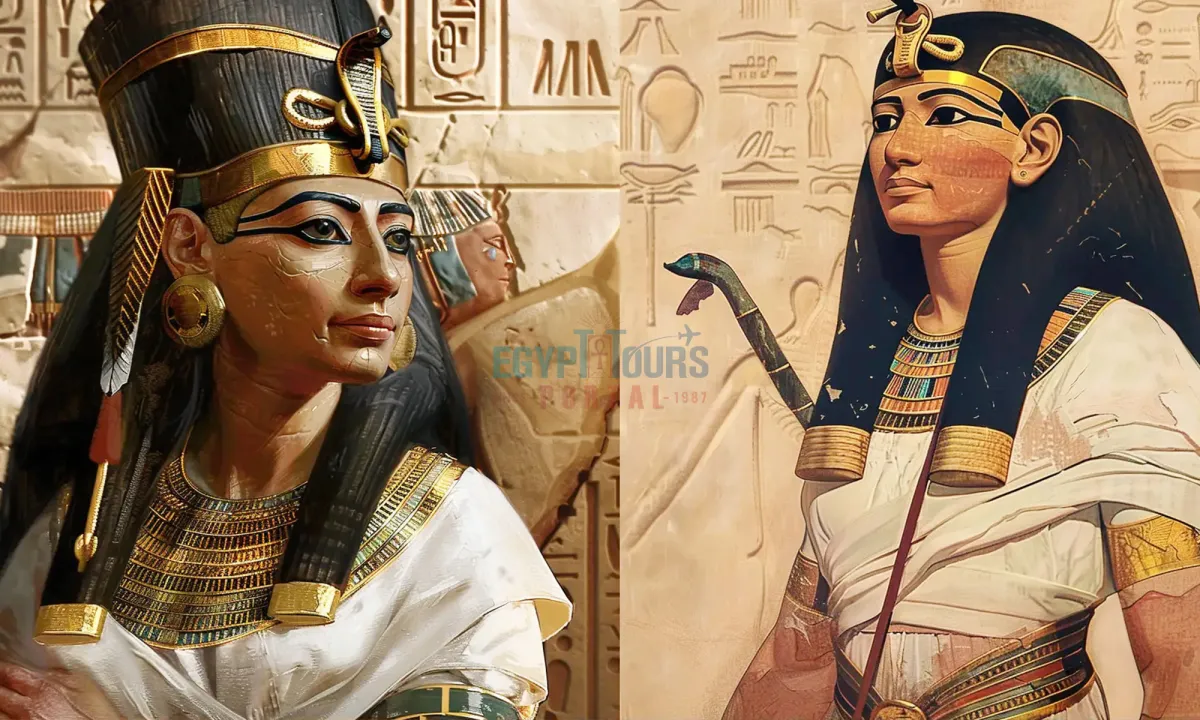 Photo: ancient Egypt, via www.egypttoursportal.com
 Photo: Mount Everest, via images.foxweather.com
But here's the thing that search engines have never replicated: you almost always read more than you came for. The entry on ancient Egypt was next to an entry on the Aegean Sea and across the page from a timeline of early civilizations. You followed the thread. You spent twenty minutes when you meant to spend three. You came back to the table knowing more than you'd intended to find out.
That wasn't a bug. That was the whole architecture of the thing — knowledge organized to invite wandering, to reward tangents, to make learning feel like exploration rather than retrieval.
When the Internet Made Curiosity Free
The World Wide Web didn't kill the encyclopedia overnight. It happened in stages. First came CD-ROM encyclopedias in the early 1990s — Microsoft Encarta, most famously — which delivered most of the same information for a fraction of the cost and added video clips and audio. Sales of printed encyclopedias began to slide. Then came the open web, and then Wikipedia, and then the full collapse of the market. Britannica stopped printing its physical encyclopedia in 2012 after 244 years. World Book hung on longer, but the cultural moment had passed.
What replaced it was extraordinary by any objective measure. The sum of human knowledge — not a curated, editorially managed slice of it, but essentially all of it — became available to anyone with a smartphone and a data connection. For free. Instantly. In any language. With links to primary sources, competing interpretations, and real-time updates.
By every quantitative measure, this was an unambiguous improvement. More information, more accessible, more current, more democratic. The kid in rural Mississippi and the kid in Manhattan now had access to the same answers.
So why does something feel like it was lost?
The Paradox of Free
Here's the uncomfortable question that the encyclopedia's disappearance quietly raises: does making something free make it less valuable in the ways that actually matter?
Not in price — in attention. In intentionality. In the relationship a person develops with information when acquiring it requires effort.
The family that spent $400 on a set of encyclopedias in 1972 was making a statement to their children, whether they said it out loud or not: knowledge is worth sacrifice. The books sat on the shelf as a physical reminder of that belief. Kids grew up around them, absorbed them, understood that information was something you sought out deliberately, that it had weight, that it deserved to be taken seriously.
The smartphone delivers the same facts in three seconds and costs the user nothing in effort or attention. Which means there's no signal — no friction, no investment, no weight — to suggest that the answer matters. Research on reading comprehension has found, repeatedly, that people retain information better when they read it on paper than on screens. Separate research suggests that the ease of digital lookup may reduce the likelihood that people store information in long-term memory at all, since the brain learns to treat the device as an external hard drive rather than internalizing what it finds.
We didn't just change the medium. We may have changed the relationship.
What the Encyclopedia Salesman Was Really Selling
Think about what it meant for a family to own those books. It meant that on any given evening, a child could walk to a shelf in their own home and find a starting point for almost any question. It meant that learning didn't require a trip, a library card, or a parent who had time to drive somewhere. It meant that curiosity had a physical home in the household.
The sacrifice involved in buying them wasn't incidental to their value. It was part of it. The financial decision signaled a set of priorities. It said: in this house, we believe that knowing things matters enough to pay for it.
Today, knowing things costs nothing. And that is genuinely miraculous — a kind of democratic revolution in access to human understanding that previous generations could barely have imagined.
But something changed when the sacrifice disappeared. When the answer to any question is three seconds and zero dollars away, the question itself becomes cheaper. The pursuit of knowledge, once a deliberate act that required effort and occasionally money, became something you do between scrolling and without particularly meaning to.
The encyclopedia sat on the shelf and waited to be consulted. The internet fits in your pocket and competes with everything else in there for a few seconds of your attention.
The knowledge is better now. The relationship with it might not be.