He Showed Up at Your Door With a Black Bag — When Sick Kids Got Treated at Home Instead of a Waiting Room
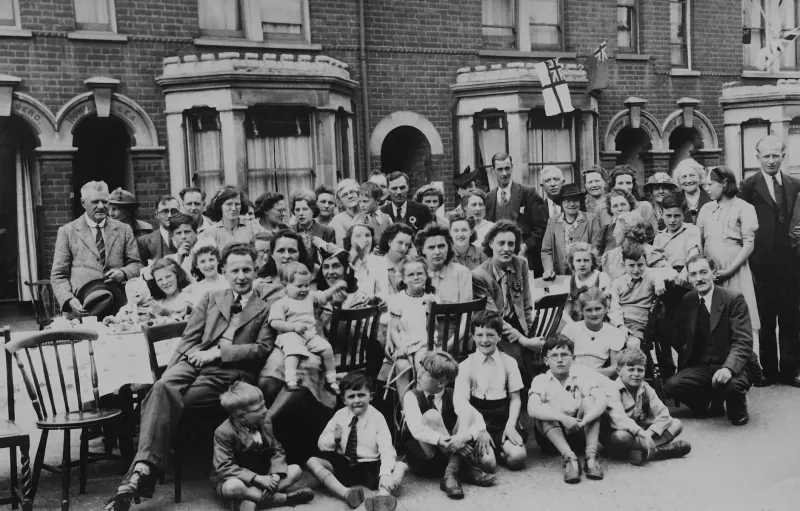
Photo: State Library of Queensland, Australia, No restrictions, via Wikimedia Commons
Somewhere in the mid-twentieth century, millions of American families lived by a simple rule: if the kid was sick enough to worry about, you called the doctor. Not a hotline. Not a scheduling portal. The actual doctor. And within a few hours — sometimes less — that doctor would pull up to the curb, walk through the front door, and sit on the edge of the bed while your child coughed and cried.
He'd charge you a few dollars. Maybe five. Maybe ten if it was a Sunday. You'd pay in cash, he'd write it in a ledger, and that was that.
That wasn't a fairy tale. That was standard American healthcare for most of the twentieth century.
The Doctor Who Came to You
The house call was once the backbone of pediatric medicine in this country. As recently as 1930, an estimated 40 percent of all physician visits took place in the patient's home. Even into the 1950s and early 1960s, the family doctor making rounds through the neighborhood after office hours was a completely ordinary thing.
These weren't specialists with narrow expertise and packed appointment books. They were general practitioners who knew your family, knew your kid's medical history, and could diagnose an ear infection or strep throat without a $400 office visit and a two-week wait for an available slot. They carried what they needed in a black leather bag — a stethoscope, some basic instruments, a few common medications — and they used their judgment.
The fee was almost always affordable. A house call in the 1950s typically ran between $3 and $8, which adjusted for inflation lands somewhere around $35 to $75 today. Except today, an urgent care visit — which requires you to do the traveling, the waiting, and the parking — routinely costs $150 to $300 before insurance even enters the picture.
And that's if you can get seen at all.
What Replaced It
The house call didn't die overnight. It faded across three or four decades as the economics of medicine shifted in ways that made home visits increasingly impractical for physicians and increasingly unavoidable for everyone else.
Specialization exploded after World War II. Medical schools began training doctors for narrower and narrower fields, which meant the broadly capable family doctor became a rarer figure. At the same time, hospitals and clinics invested heavily in diagnostic equipment — X-ray machines, lab testing, electrocardiograms — that couldn't exactly fit in a leather bag. The logic of centralized care started to make sense on paper.
Then came the insurance era. As employer-sponsored health coverage became the norm in the 1960s and 1970s, the direct financial relationship between doctor and patient got replaced by a billing system that rewarded procedures over conversations, volume over time, and in-office visits over home ones. House calls didn't fit neatly into billing codes. They weren't efficient. They didn't scale.
So they disappeared.
The Human Cost of Efficiency
Here's what that efficiency actually looks like in 2025.
A parent notices their four-year-old has a fever of 102 degrees at 7 p.m. on a Tuesday. Their pediatrician's next available appointment is eleven days away. The nurse advice line says to monitor it. By 9 p.m. the child is miserable and the parent is anxious, so they drive to urgent care, where they wait two hours among other sick children in a waiting room that is, epidemiologically speaking, a petri dish. They see a provider for eight minutes. They get a prescription. The visit costs $220 after insurance. They're home by midnight.
That is the modern version of the doctor showing up at your door.
For families without solid insurance coverage, the math is even grimmer. The average cost of a pediatric emergency room visit in the United States now exceeds $1,500. Many families — particularly those in lower-income brackets — avoid care entirely until symptoms become serious enough to force the issue. Children get sicker than they needed to get. Parents rack up debt for the privilege.
The American Academy of Pediatrics has flagged pediatric workforce shortages as a growing crisis. In many rural areas, families drive 45 minutes or more to reach the nearest pediatrician. Appointment wait times in some urban markets have stretched to six, eight, even twelve weeks for new patients.
 Photo: American Academy of Pediatrics, via iprsoftwaremedia.com
Telehealth Isn't the Answer You Think It Is
The pandemic briefly revived something like the house call concept in digital form. Telehealth exploded between 2020 and 2022, and for a moment it looked like virtual visits might restore some of the accessibility that had been lost over the previous half century.
And for certain things — a rash you can show on camera, a refill conversation, a check-in about mild symptoms — telehealth genuinely works. But it can't do what the doctor with the black bag could do. It can't examine a throat, check an ear canal, feel a lymph node, or listen to a chest. For children especially, so much of diagnosis is physical. A screen call is better than nothing, but it's not the same as someone in the room.
The deeper issue is that telehealth, like urgent care, still runs through the same billing machinery that made house calls unworkable in the first place. It's a workaround for a broken system, not a solution to one.
The Price We Didn't Know We Were Paying
When people talk about the rising cost of healthcare in America, the conversation usually centers on premiums, deductibles, and drug prices. Those are real and serious problems. But there's a subtler cost buried inside this story — the cost of a system that traded human accessibility for institutional efficiency.
The doctor who came to your house wasn't just cheaper. He was faster, less stressful, and less likely to expose your already-sick child to other sick children in a crowded waiting room. He knew your family. He made a judgment call with experience and context, not a nine-minute consultation with a stranger reading from a screen.
That version of medicine is largely gone. What replaced it costs more, takes longer, and often feels less like care and more like processing.
Somewhere between the ledger book and the billing code, the system lost the plot. And the ones who feel it most are the kids sitting under fluorescent lights at 10 p.m., waiting for someone to finally call their name.