The Broken Arm That Gave You Permission to Stop — And the Culture That Took It Away
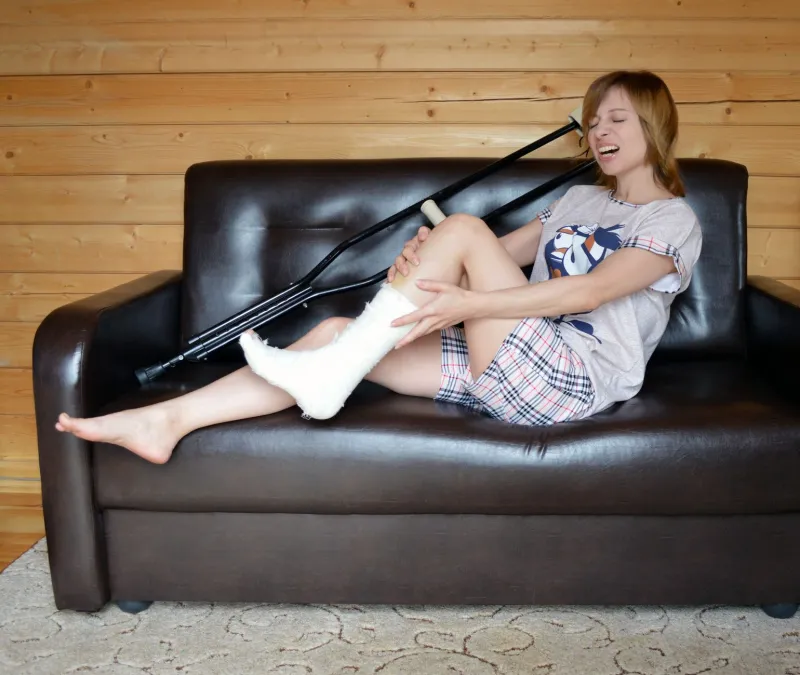
Ask anyone who broke a bone before, say, 1995 what recovery looked like, and you'll hear a version of the same story. There was a couch. There was a cast. There was a stack of paperback novels or a TV with four channels. There was, whether you wanted it or not, time.
Nobody expected you to be productive. Nobody emailed you to check on deliverables. Your body had been interrupted, and so, for a defined and socially understood period, had your life.
That world is gone. And it's worth asking what exactly we traded it for.
When Rest Was the Treatment
For most of American medical history, the prescription for injury was simple and non-negotiable: immobilization and time. A broken leg meant a cast and crutches for six to eight weeks. A back injury meant bed rest — actual, horizontal, don't-you-dare-go-to-work bed rest. Surgeries required hospital stays that ran into weeks, not the same-day discharge that's now standard.
This wasn't just medical conservatism. It reflected a genuine understanding that the body heals on its own schedule, and that schedule does not care about your quarterly targets. Doctors of that era were, in a sense, permission-givers. They handed you a note that said: you are allowed to stop.
And here's the thing — that permission mattered. It was socially legible. Your employer understood it. Your neighbors understood it. Your family understood it. Injury created a recognized category of human experience called recovery, and recovery had a texture to it: slower mornings, afternoon naps, the strange intimacy of being cared for by people who loved you.
Medicine Got Better. The Culture Got Worse.
Let's be honest about what's genuinely improved. Modern orthopedic surgery is extraordinary. Arthroscopic procedures that once required weeks of hospitalization now happen through incisions the size of a pencil eraser. Physical therapy has become a sophisticated science. Pain management, imaging technology, and surgical precision have all advanced in ways that genuinely reduce suffering and shorten the biological timeline of healing.
A torn ACL that ended careers in the 1970s is now a nine-to-twelve month rehabilitation project with a strong probability of full return to activity. That's remarkable. Nobody should romanticize the era of inadequate pain relief and unnecessary immobilization.
But something happened alongside all that medical progress. As healing became faster and more efficient, the cultural expectation around recovery shifted from take the time you need to get back as fast as possible. The medical improvement became a productivity argument. If your surgery is outpatient now, the logic goes, shouldn't you be functional by Monday?
The Invisible Pressure
Speak to anyone who has experienced a serious injury in the last decade and you'll hear a consistent undercurrent of guilt. A 2022 survey by the American Psychological Association found that nearly 60% of American workers reported feeling pressure to continue working while sick or injured. The number climbs higher among people without paid sick leave — which, unlike virtually every other wealthy nation, the United States does not guarantee at the federal level.
The result is a quiet epidemic of under-recovery. People returning to physically demanding jobs before fractures have fully knit. Office workers logging on from the couch the day after surgery, laptop balanced on a pillow, pretending the anesthesia has worn off. Athletes — professional and recreational alike — rushing back from injuries that haven't healed, accumulating the kind of chronic damage that shows up a decade later as arthritis and early joint replacement.
And it's not just physical. The psychological dimension of recovery — the processing of vulnerability, the recalibration of identity that comes with a body that isn't working the way it should — requires stillness that modern American life actively discourages.
What Enforced Rest Actually Did
There's a reason people who grew up in earlier eras often look back on childhood recoveries with something close to nostalgia. Not for the pain or the inconvenience, but for the strangeness of suddenly being outside the normal rhythm of things.
You read books you'd never have picked up otherwise. You had long, wandering conversations with relatives who came to sit with you. You watched the light move across the ceiling of your bedroom and thought about things you never had time to think about. You got bored in a way that, research now suggests, is actually cognitively valuable — boredom being one of the few states that activates the brain's default mode network, the system associated with creativity, self-reflection, and long-term planning.
Six weeks of enforced stillness was, for many people, the longest uninterrupted thinking time of their adult lives.
The Gap We're Living In
The distance between then and now isn't measured only in medical outcomes or workplace policy. It's measured in what we believe about ourselves when we're hurt. A generation ago, injury was something that happened to you, and your job was to submit to it. Today, injury is something to be managed, minimized, and communicated around — a logistical problem rather than a human experience.
The irony is that we have never been better equipped to heal quickly, and we have never felt less entitled to take the time to do it.
Somewhere between the plaster cast and the same-day discharge, we lost the cultural script that said: a broken body needs more than a repaired bone. We got faster at the physical part. We forgot about everything else.