Nickels, Trades, and Hustle: When American Kids Had Their Own Working Economy
Photo: Kyle Van Horn from Baltimore, MD, CC BY 2.0, via Wikimedia Commons
Somewhere around age eight, a lot of American kids in the 1960s and 1970s became, without any formal instruction, small-scale entrepreneurs. They collected empty glass soda bottles from ditches and back alleys and carried them to the corner store, where two cents apiece added up faster than you'd think. They traded baseball cards with the precision of commodity brokers, knowing which rookie cards were undervalued and which veterans were past their peak. They negotiated lawn-mowing rates with neighbors, argued about fair payment for raking leaves, and set up lemonade stands on hot Saturdays with the earnest confidence of people who had done a genuine market analysis.
Nobody taught them this. They learned it by doing it, over and over, with real money and real consequences.
That informal financial education has mostly vanished. And the gap it left behind is larger than it looks.
The Bottle Deposit Economy
For kids growing up in the mid-twentieth century, the bottle deposit was a foundational financial institution. Glass soda and beer bottles carried a refund value — typically two to five cents — that manufacturers charged upfront to encourage returns. For adults, this was a minor inconvenience. For kids, it was an entire business model.
A Saturday morning spent combing the edges of a park or the back of a vacant lot could yield a dozen bottles. A dozen bottles meant a trip to the store. A trip to the store meant a choice: spend the proceeds immediately on candy or baseball cards, or save them toward something bigger. That choice — the tension between instant gratification and deferred reward — was one of the most important financial lessons a kid could learn, and it arrived not through a classroom lecture but through the weight of nickels in a sweaty hand.
Some kids organized. They established collection territories with friends. They negotiated splits. They figured out which store paid out fastest and which one tried to short them on the count. Without ever using the word "entrepreneurship," they were practicing it.
Baseball Cards as a Real Market
The baseball card trade of the 1960s and 1970s was a functioning secondary market, and kids were its primary participants. Cards had real value hierarchies. Condition mattered. Scarcity mattered. Supply and demand operated in real time across every schoolyard and bedroom floor in America.
A kid who understood that a 1952 Mickey Mantle was worth more than a stack of common players was learning, in practical terms, how markets price rarity. A kid who traded three mediocre cards for one good one was learning negotiation. A kid who got burned on a bad deal — accepting a counterfeit duplicate or overvaluing a card based on a friend's hype — was learning due diligence the hard way.
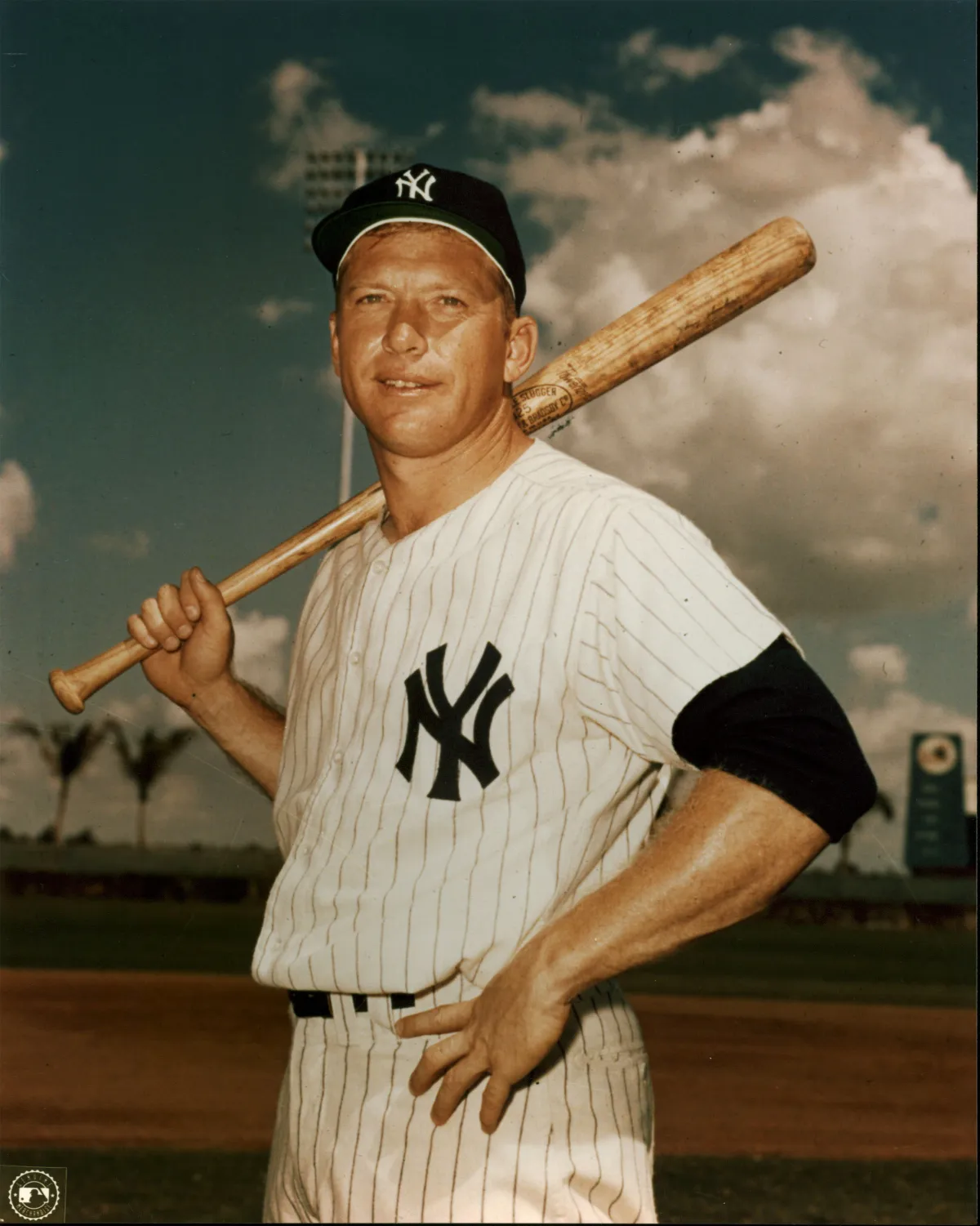 Photo: Mickey Mantle, via presspass-assets-staging.s3-us-west-1.amazonaws.com
These weren't trivial lessons. They were the same principles that govern bond markets and real estate negotiations and salary talks, just compressed into a format accessible to a ten-year-old with a shoebox full of cardboard.
The card market eventually collapsed under the weight of overproduction in the 1980s and 1990s, when manufacturers flooded the market and destroyed the scarcity that gave cards their value. Kids who had built collections expecting appreciation watched them become worthless. That, too, was a financial lesson — one about bubbles and the danger of speculative markets — delivered without any adult mediation.
The Lemonade Stand as First Business
The lemonade stand has become a cultural cliché, but in its original form, it was a genuine exercise in basic business operation. A kid who set one up had to consider costs (lemons, sugar, cups, the ice they needed to borrow from the kitchen), pricing (too high and nobody stops, too low and you don't cover your costs), location (which corner gets foot traffic?), and timing (a hot afternoon beats a cloudy morning).
They also dealt with competition. Another kid might set up a stand two blocks away. They had to decide whether to undercut on price, differentiate on product, or find a better spot. These were real strategic decisions with real financial outcomes, and they were happening at ages when modern children are more likely to be navigating an app than negotiating a price.
Critically, these stands operated in a low-regulation environment that has since changed considerably. Today, lemonade stand operators — even children — have faced permit requirements and health inspections in various jurisdictions across the country. Several high-profile cases made national news when kids were shut down by local authorities. The informal permission to simply try something small and harmless has eroded.
Odd Jobs and the Neighbor Economy
Beyond bottle deposits and card trades, the neighborhood itself was a labor market. Lawns needed mowing. Leaves needed raking. Cars needed washing. Gutters needed cleaning. Dogs needed walking before that was a formalized service industry. Elderly neighbors paid fair rates for small tasks, and in doing so, gave kids their first experience of earning money through direct labor rather than receiving it as an allowance.
The negotiation that happened on those front porches was genuine. A kid who asked for too much got turned down and learned to recalibrate. A kid who undercharged discovered that word traveled and they'd created a market expectation they couldn't easily escape. The feedback loop between effort, quality, and compensation was immediate and personal.
This neighbor economy has largely dried up. Concerns about child safety — some legitimate, some overcautious — have made many adults reluctant to hire neighborhood kids for informal work. Liability anxiety has replaced the easy handshake deal. Professional lawn services and app-based task platforms have absorbed what was once a natural entry point for young workers.
What Was Really Being Taught
The informal kid economy wasn't just about money. It was about cause and effect, about the relationship between effort and outcome, about the real meaning of a transaction. Kids who grew up inside that system arrived at adulthood with an intuitive understanding of value, negotiation, and financial consequence that no classroom curriculum fully replicates.
They knew what a nickel was worth because they had earned nickels. They knew what a bad deal felt like because they had made bad deals and lived with the results. They knew that money required work because they had done the work.
The children who came after them were handed debit cards and digital allowance apps, which are convenient and trackable and almost entirely abstract. The money arrives without effort. The transaction happens without negotiation. The lesson — the real one, the one that sticks — never quite lands.
We didn't just lose a charming piece of Americana when we shut down the informal kid economy. We lost one of the most effective financial education systems this country ever accidentally built.