The Mechanic Who Walked You Through Every Repair — Before the Diagnostic Screen Replaced the Conversation
Photo: East Riding Archives, CC0, via Wikimedia Commons
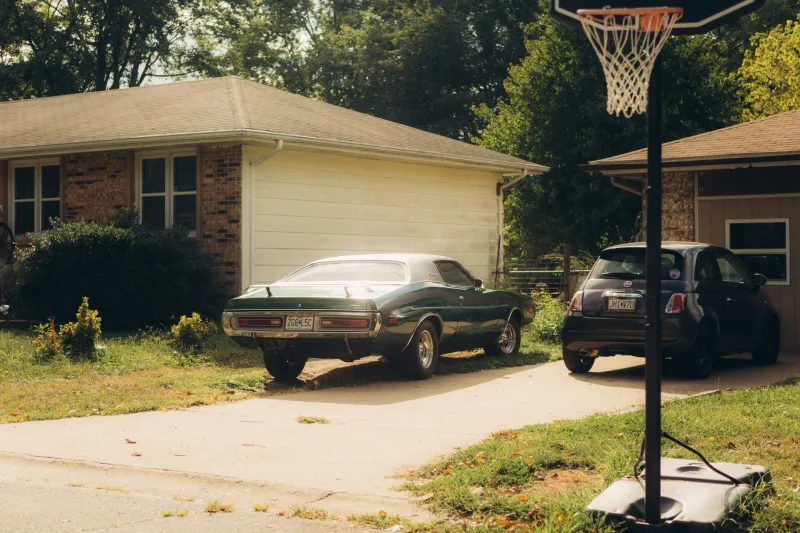
There's a particular memory that a certain generation of Americans carries around without fully realizing how unusual it sounds today. You'd pull into the neighborhood garage with a strange noise coming from under the hood. The mechanic — usually someone you knew by first name — would wipe his hands on a rag, pop the hood, and spend ten minutes explaining what was happening in language you could actually follow. He'd show you the worn belt, the cracked hose, the part that needed replacing. He'd tell you what it would cost, roughly, and why.
You'd drive away understanding your own car a little better than before.
That experience didn't just fade because cars got more complicated. It faded because the entire relationship between Americans and their vehicles was quietly restructured — and most people didn't notice until the bill arrived.
When the Shop Was Also a School
For most of the twentieth century, auto repair was a transparent trade. Independent mechanics operated on a simple model: they charged by the hour, they showed their work, and they built their businesses on repeat customers who trusted them. A handwritten invoice wasn't a formality — it was a detailed explanation of what had been done, what part had been replaced, and exactly how many hours the job had taken.
In the 1960s, a typical labor rate at an independent shop ran between $3 and $6 per hour. By the late 1970s, that had climbed to somewhere in the $15 to $25 range. Even accounting for inflation, those rates look modest compared to today's national average shop rate, which frequently exceeds $150 per hour at dealerships and runs $90 to $130 at independent shops in most metro areas.
But the money isn't the whole story. The bigger shift was in access — specifically, access to knowledge about what was actually happening to your vehicle.
The mechanics of that era weren't gatekeeping information. Most of them genuinely enjoyed explaining things. They'd grown up tinkering with engines themselves, and they understood that an informed customer was a loyal one. If you wanted to stand beside the lift and watch them work, most shops had no objection. If you asked a question, you got an answer in plain English, not a shrug and a service estimate.
When Computers Changed Everything
The shift began in earnest in the 1980s, when manufacturers started integrating computer-controlled systems into engines and drivetrains. By the 1990s, the onboard diagnostic system — OBD — had become standard across the industry. By 1996, federal regulations required a universal OBD-II port in every new vehicle sold in the United States.
 Photo: United States, via map.printable.us.com
On the surface, this was progress. Diagnostic computers could identify problems faster and more accurately than a mechanic with a flashlight and forty years of experience. Engines became more fuel-efficient. Emissions dropped. Performance improved across the board.
But a side effect emerged that nobody quite advertised: the knowledge gap between the person who owned the car and the person who fixed it widened dramatically. Suddenly, understanding what was wrong with your vehicle required a proprietary diagnostic tool that cost thousands of dollars and was often locked to specific manufacturers or dealer networks.
Automakers leaned into this. Software locks — sometimes called "right to repair" barriers — began limiting which shops could access certain vehicle systems. Dealer-exclusive diagnostic software meant that for many newer models, independent mechanics simply couldn't access the same information a franchise dealership could. The car you owned was increasingly a machine you couldn't fully understand, and in some cases, couldn't legally have repaired outside of a dealer network without voiding your warranty.
The Bill That Explains Nothing
Walk into a dealership service department today and the experience is a long way from the neighborhood garage. You hand your keys to a service advisor — often someone with no mechanical background at all — who enters your complaint into a computer. The car goes back to a technician you'll never meet. Forty minutes later, you receive a printed estimate that lists labor operations by code, parts by catalog number, and totals that seem to materialize from nowhere.
There's rarely an explanation of why. There's rarely an invitation to come look. There's certainly no one walking you through the logic of the repair so you leave understanding your own vehicle better.
A 2023 survey by Consumer Reports found that unexpected or unexplained repair costs ranked among the top frustrations Americans reported with car ownership. That's not surprising. When the diagnostic process is invisible and the pricing is opaque, the entire transaction runs on blind trust — and blind trust is expensive.
The average American now spends over $1,200 per year on vehicle maintenance and repairs, according to AAA. That number has grown faster than inflation for three consecutive decades.
The Right to Repair Fight
The tension between car owners and manufacturers over access to repair information eventually became a legal and legislative battle. The Right to Repair movement — which gained real momentum in the 2010s and continues today — argues that consumers should have the legal right to repair their own property using whatever tools and information they choose, without being locked into manufacturer-controlled service networks.
Massachusetts passed a landmark right-to-repair law in 2020, and similar legislation has been introduced in dozens of other states. The automotive industry has fought back hard, arguing that vehicle software contains proprietary information and that opening access creates cybersecurity risks.
The debate is genuinely complex. But the underlying frustration driving it is simple: Americans increasingly feel like passengers in their own cars, financially and intellectually.
What a Conversation Used to Be Worth
The old mechanic at the corner shop wasn't just fixing your car. He was transferring knowledge. He was making you a more capable owner. He was building a relationship that ran on trust and transparency rather than information asymmetry.
That relationship had real financial value, even if nobody put a number on it. When you understood what your car needed, you could make informed decisions. You could prioritize repairs. You could avoid being upsold on services you didn't need. You could even handle some things yourself.
Today, most Americans walk into a service appointment at a disadvantage — and the system is built to keep it that way. The diagnostic screen replaced the conversation. The service advisor replaced the mechanic. The opaque estimate replaced the handwritten invoice.
Something that looked like progress turned out to be a very effective way of ensuring that the only person who truly understood your car was the one charging you to fix it.