"See You Monday" — When Getting Laid Off Meant a Few Weeks Off, Not Financial Ruin
The Layoff That Came With a Return Date
In 1973, when the Chrysler plant in Detroit announced temporary layoffs, foreman Bill McCarthy didn't panic. Neither did the 2,800 workers who got pink slips that Friday afternoon. They'd been through this before — seasonal slowdowns, retooling periods, model changeovers. The plant manager even said it: "See you in six weeks." And he meant it.
McCarthy used the time to paint his house, help his neighbor rebuild an engine, and take his family camping in Michigan's Upper Peninsula. When the recall notice arrived five weeks later, he was rested and ready to return to the same job, same shift, same pay rate. The layoff had been exactly what the company called it: temporary.
For most of the 20th century, this was how layoffs worked in America. They were disruptions, not disasters. Companies used them to manage seasonal fluctuations, economic downturns, or production changes, with the understanding that workers would return when business picked up. The system worked because everyone — employers, employees, and the broader economy — was designed around the assumption that jobs were permanent relationships with temporary interruptions.
When Companies Actually Planned to Bring You Back
The old layoff model operated on fundamentally different principles than today's "workforce optimization." Companies maintained detailed recall lists, organized by seniority and job classification. When production ramped back up, they called workers back in reverse order of layoff. Your spot on the line was held, your benefits continued, and your seniority clock kept ticking.
Automakers, steel companies, and manufacturers built this system into their business models. Ford's River Rouge plant might lay off 5,000 workers in November and recall 4,800 of them in February. The math worked because labor was viewed as an investment, not an expense. Training skilled workers cost money; it made financial sense to keep them connected to the company even during slow periods.
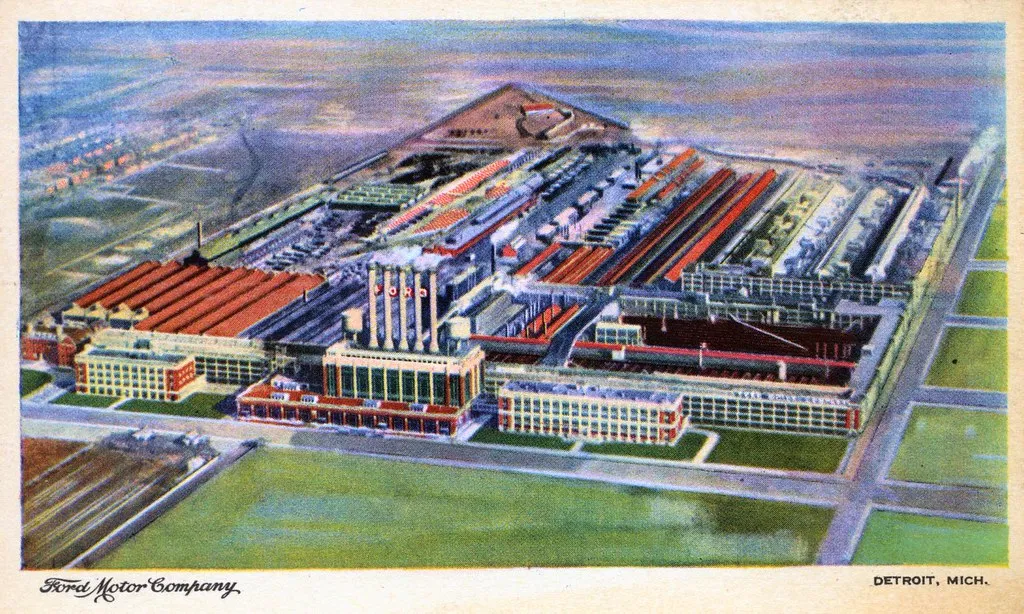 Photo: Ford's River Rouge plant, via live.staticflickr.com
Severance packages weren't generous by today's standards, but they were standard. Two weeks' pay for every year of service was common, along with extended health insurance coverage. More importantly, companies provided something that's almost extinct today: certainty about when you'd be back.
The Safety Net That Actually Caught People
Unemployment benefits in the 1960s and 70s replaced a higher percentage of lost wages than today's system. But the real safety net was cultural and economic: single-income families were the norm, meaning most households had built-in financial buffers. When Dad got laid off from the plant, Mom's unpaid labor managing the household meant the family could tighten belts without losing essential services.
Community support systems were stronger too. Churches organized food drives specifically for laid-off workers. Local businesses offered informal credit to families they knew would be back on their feet soon. The corner grocery store might let you run a tab for two months because everyone understood the layoff was temporary.
Most importantly, the cost of living was structured to accommodate temporary income disruption. Housing costs consumed 20-25% of median household income, not today's 35-40%. A family could miss two mortgage payments and work out a payment plan with their local bank manager — someone who knew them personally and had authority to make decisions.
How Permanent Layoffs Became the New Normal
The transformation began in the 1980s, driven by Wall Street's discovery that cutting payroll was the fastest way to boost quarterly earnings. Companies stopped viewing workers as investments and started seeing them as variable costs to be minimized. The euphemisms multiplied: "rightsizing," "workforce reduction," "corporate restructuring." But the effect was the same — layoffs became permanent.
Modern layoffs aren't about temporary business cycles; they're about fundamental business model changes. When a tech company "right-sizes" its workforce, those jobs aren't coming back. The work either gets outsourced, automated, or eliminated entirely. The pink slip comes with career counseling services, not a recall date.
Today's average job search takes 3-6 months, and many workers never find positions that match their previous salary. The Bureau of Labor Statistics reports that 40% of displaced workers who find new jobs earn less than they did before. For workers over 50, the statistics are even grimmer — many never return to full-time employment.
The New Math of Job Loss
Modern layoffs hit families differently because modern families are structured differently. Two-income households are now the norm, but instead of providing extra security, dual incomes often create dual vulnerabilities. Both spouses typically work because both incomes are necessary to maintain their lifestyle. When one loses their job, the family can't just tighten belts — they face potential financial catastrophe.
The costs of job searching have exploded too. In 1975, finding a new job meant checking newspaper classifieds, making phone calls, and showing up for interviews. Today's job search requires maintaining professional networking profiles, potentially relocating for opportunities, and navigating applicant tracking systems that screen out resumes before human eyes see them.
Meanwhile, the expenses that families could once defer — health insurance, mortgage payments, student loans — have become non-negotiable monthly obligations. COBRA health insurance can cost $1,500 per month for family coverage. Student loan payments don't pause for unemployment. Credit card companies don't care that your industry was disrupted by technology.
When Job Security Meant Something
The old layoff system reflected an economic compact that no longer exists: companies provided stability in exchange for loyalty, and society was organized around the assumption that most people would work for the same employer for decades. Workers invested in company-specific skills because they expected to use those skills at the same company for 30 years.
That compact broke down as global competition intensified and shareholders demanded maximum short-term returns. The "gig economy" and "workforce flexibility" became corporate buzzwords for transferring economic risk from companies to individuals. Today's workers are expected to be entrepreneurs of their own careers, constantly reskilling and networking and building "personal brands."
But here's what we lost in that transition: the security that allowed working families to plan beyond the next paycheck. When layoffs were temporary, families could make long-term financial commitments. They could buy houses, have children, and build communities around the assumption of stable employment.
The Real Cost of Uncertainty
The shift from temporary to permanent layoffs changed more than just individual financial security — it restructured American society around anxiety. Workers who know they could be "right-sized" at any moment make different decisions about spending, saving, and family planning. Communities become less stable when residents can't count on staying employed locally.
Perhaps most significantly, the end of job security broke the link between productivity and prosperity that defined the American middle class for decades. Workers are more productive than ever, but that productivity no longer translates into job security or rising wages. Instead, it often translates into workforce reductions as companies find ways to maintain output with fewer employees.
The temporary layoff system wasn't perfect — it reinforced industrial hierarchies and often excluded women and minorities from the most secure positions. But it provided something that seems almost quaint today: the expectation that work disruptions would be brief, manageable, and followed by a return to normalcy. In losing that expectation, American workers gained flexibility but lost the foundation that once made middle-class life predictable and secure.